A.M.K. OUARDANI RECUPERACIONES TEXTILES - Leading Textile Recycling & Wholesale Exporter
A.M.K. OUARDANI RECUPERACIONES TEXTILES is a Spain-based wholesale supplier specializing in sorted secondhand clothing and used shoes. They serve international trade buyers seeking bulk wholesale quantities, including exporters and industrial textile purchasers.
Overview of A.M.K. OUARDANI RECUPERACIONES TEXTILES
A.M.K. OUARDANI RECUPERACIONES TEXTILES is a Spanish company focused on the wholesale distribution and export of secondhand clothing, shoes, and related textile products. Based in Castellón de la Plana, Spain, the company operates a large recovery and sorting facility that manages textiles collected from multiple sources. Their core business model revolves around supplying high-volume buyers across multiple international markets.
Product Range and Classification
The company provides a wide array of secondhand goods, including sorted clothing segmented by quality grades, seasonal categories, and demographics such as men's, women's, and children's wear. Additionally, they offer used shoes packed in matched pairs and assorted accessories like bags, belts, and household linens. Lower quality textiles unsuitable for clothing resale are repurposed into industrial wiping rags, enhancing resource efficiency.
Typical Purchase Formats
- Bales compressed into varying weights between 45 kg and 500 kg
- Bulk sales by the kilogram for specialized segments
- Container shipments for export buyers
Operational and Logistics Capabilities
The logistics framework at A.M.K. OUARDANI RECUPERACIONES TEXTILES is tailored to support exports primarily to regions including North and West Africa, Eastern Europe, and South America. Packaging and dispatch procedures focus on maintaining product integrity and regulatory compliance during international transit. Lead times vary depending on order characteristics, and the company advises clients to plan accordingly.
Quality Management
Quality assurance is embedded in the sorting process through manual inspection and categorization aligned with typical industry standards. While specific grading nomenclature is proprietary, the practice involves classifying textiles to meet diverse quality expectations ranging from resale-ready items to materials for industrial applications. This segmentation enables buyers to select stock appropriate to their target market.
Sustainability and Environmental Impact
The company actively supports sustainability by promoting textile reuse and contributing to a circular economy. Their processes reduce landfill textile waste by diverting reusable garments back into the market and reallocating lower quality materials for alternative uses. Sustainable practices are integral to their business approach, reflecting broader efforts within the secondhand textile sector to minimize environmental impact.
Working with A.M.K. OUARDANI RECUPERACIONES TEXTILES
Potential clients include international importers sourcing full containers of mixed secondhand clothing, local market vendors purchasing by the bale, and companies requiring industrial wiping rags in bulk. Communication is generally conducted in Spanish, though accommodations may be available in French or Arabic based on trade regions.
- Order placement generally requires high minimum volumes
- Sales are wholesale only; individual item sales are not offered
- Clients receive tailored sorting and packaging according to destination and product category
Overall, A.M.K. OUARDANI RECUPERACIONES TEXTILES provides established wholesale services within the European textile recovery sector, focusing on bulk export and sustainable reuse of secondhand textiles and footwear.
A.M.K. OUARDANI RECUPERACIONES TEXTILES implements structured quality control processes typical for wholesale secondhand textile suppliers in Europe. Upon collection, used textiles undergo sorting by experienced staff to categorize items according to general condition, fabric type, and usability. Common categories include higher quality clothing suitable for direct resale and lower grades allocated for industrial use such as wiping rags.
The sorting process ensures that garments are free from major damage, excessive stains, or irreversible wear. Items are often classified into broad grades, allowing buyers to select according to their market requirements. The company emphasizes consistency in grading to meet wholesale buyers' expectations while recognizing inherent product variability.
In addition to visual inspection, textiles are typically organized by type and seasonality to aid logistics. Although specific grading scales are proprietary, A.M.K. OUARDANI RECUPERACIONES TEXTILES follows industry-standard practices to maintain transparency and quality assurance throughout the supply chain.
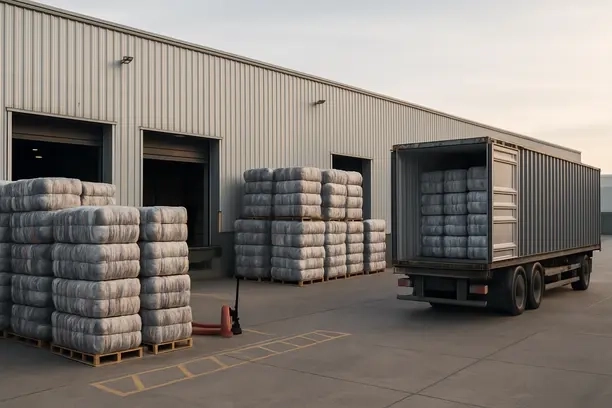
The company manages logistics with experience exporting bulk secondhand clothing and shoes from Spain to various international markets. Textiles are compressed into bales, commonly weighing between 45 and 500 kilograms, to optimize storage and shipping efficiency. Packaging methods prioritize protection against moisture and damage during transit.
Dispatches are organized to accommodate substantial order volumes, often requiring container shipments. Lead times depend on order size, destination, and current stock availability, with customers advised to coordinate well in advance for international deliveries.
Export readiness includes documentation and packaging conforming to export requirements for Europe, North Africa, and South America. Coordination with freight forwarders and customs agents is an integral part of the dispatch process, helping to streamline delivery timelines and support reliable supply chain management.
A.M.K. OUARDANI RECUPERACIONES TEXTILES prioritizes sustainability through the recovery and reuse of textiles, contributing significantly to circular economy principles. By sourcing used clothing, shoes, and household textiles from collection bins and charitable channels, the company reduces waste destined for landfill and extends the lifecycle of garments.
The sorting and classification processes maximize resource efficiency by diverting textiles unsuitable for resale to alternative industrial uses such as wiping rags, minimizing fabric waste. This approach supports waste reduction and environmental stewardship within the textile sector.
In promoting reuse and facilitating international redistribution, the company aligns with global efforts to reduce overproduction impacts and encourage sustainable consumption patterns. While formal certifications are not publicly disclosed, sustainability is embedded in operational practices focused on reuse and recycling.
Popular Wholesale Categories
Learn more about our most requested mixes and delivery options.