EUROPACK, ROPA USADA DE PRIMERA CALIDAD Textile Recycling and Export Services
EUROPACK specializes in UK wholesale secondhand supply, offering premium European used clothing suitable for trade buyers seeking high-quality import stock. The company serves markets across Latin America, Africa, and the Middle East with well-sorted, graded textiles.
Company Overview
EUROPACK, ROPA USADA DE PRIMERA CALIDAD is a recognised name in the international secondhand textile market, with a strong focus on exporting premium European used clothing. Based in Spain, the company supplies wholesale buyers primarily in Latin America, Africa, and the Middle East. EUROPACK is known for offering quality garments that meet the expectations of importers seeking modern, brand-conscious, and well-maintained secondhand apparel.
Product Range and Grading
EUROPACK's product assortment includes a broad spectrum of garment types categorized into distinctive groups such as Women's Mix, Men's Mix, Children's Clothing, Household Textiles, and Shoes & Accessories. These items are sorted and graded carefully before sale. The company prominently features "Primera Calidad" or "Cream Grade" clothing which consists of top-quality items free of significant wear, attractive to markets prioritizing fashion and condition.
The grading system broadly ranks items by their condition and usability, with higher grades corresponding to garments without stains, holes, or fading. Brand contents like Zara, H&M, Mango, and others frequently appear in higher grades, appealing to discerning buyers.
Logistics and Export Readiness
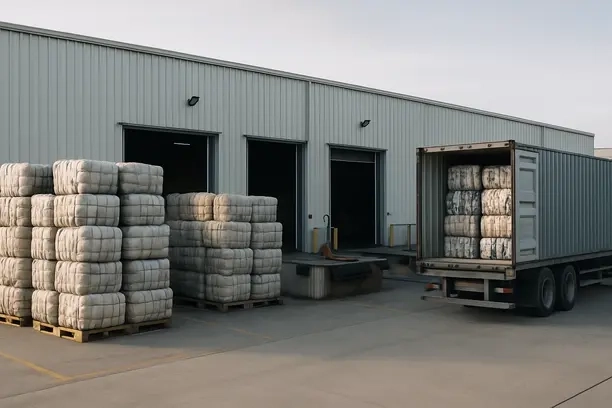
Clothing is packaged primarily in bales varying by weight—commonly 20kg, 25kg, 45kg, or 50kg—to ensure efficient bulk handling. Export logistics focus on containerized shipments, with typical orders requiring full 20ft or 40ft containers; however, pallet orders may be possible for smaller buyers.
EUROPACK provides comprehensive export documentation ensuring smooth customs processing and supports buyers through standard export terms. The company's established links to textile hubs in Spain and Europe facilitate reliable distribution across key global markets.
Packaging and Dispatch
- Standard bale weights adapted to transport and storage needs.
- Clear labeling to assist customs and inventory management.
- Coordination with freight logistics to optimize dispatch timing.
Sustainability Approach
EUROPACK embraces sustainability through promoting textile reuse and the circular economy. The wholesale supply of quality secondhand clothing inherently reduces demand for new textile production, thereby lowering environmental impact. Through sorting and responsible packaging, the company minimizes textile waste and supports extended garment life cycles.
Additionally, EUROPACK aims to optimize logistics to reduce emissions and waste across all operations, aligning with broader industry trends towards greener supply chains.
Working with EUROPACK
Trade buyers interested in EUROPACK can inquire about detailed packing lists, stock composition percentages, and arrange inspections or video demonstrations of available product lots. This transparency supports informed purchasing decisions and builds trust in the supply process.
Orders are typically coordinated on container load scales but tailored solutions may be available depending on buyer requirements. Communication channels include email and phone contacts based in Spain.
- Order formats: container loads, pallets.
- Supply categories include apparel by gender and age, household textiles.
- Quality focus: Primera Calidad / Cream Grade for high-end offering.
Contact and Locations
EUROPACK operates mainly out of Alicante, Spain, a major European hub for textile sorting and export. Its distribution network extends to key markets worldwide, leveraging geographical advantages to deliver quality secondhand clothing effectively to wholesale trade buyers.
Quality processes for a UK wholesale secondhand supplier typically focus on sorting, grading, and inspection to ensure the clothing meets acceptable standards for resale. Items are thoroughly examined for condition, wear, and cleanliness before grading. Although specific grading scales vary, a common process includes separating clothing into categories based on quality, appearance, and usability.
Clothing classified as top-tier generally shows minimal signs of previous use, with no holes, stains, or fabric damage. Recognized brands and recent fashion trends are preferred to maintain value. Lower grades still serve markets valuing affordability over condition but are clearly identified in packaging.
For reliable wholesale operations, a robust quality control system includes manual checks and consistent sorting criteria to provide buyers with predictable product standards. This approach minimizes returns and supports buyer confidence in secondhand textile sourcing.
Logistics for UK and European export of secondhand clothing involve careful packaging and dispatch procedures to preserve product condition during transit. Bulk items are typically packed in standardized bales or sacks, facilitating handling and space optimization in containers.
Orders are prepared to accommodate international shipping requirements, including export documentation and compliance checks. Delivery lead times vary depending on destination and transport mode, with priority on ensuring timely dispatch and minimizing delays.
Distribution networks are generally capable of consolidating loads for full container shipments or smaller bulk arrangements as requested by trade buyers. Adequate labeling and packing details support efficient customs clearance and stock management at destination points.
Sustainability efforts in the secondhand clothing wholesale sector emphasize reuse and the circular economy to reduce waste and environmental impact. By extending the life cycle of textiles, suppliers help divert garments from landfills and lower resource consumption inherent in new production.
Processes often include sorting to identify wearable items suitable for resale, recycling textiles beyond usability, and working with clients who share commitments to sustainable consumption. Encouraging market demand for quality used clothing supports this eco-friendly business model.
Moreover, reducing packaging waste and optimizing transport logistics to lower carbon footprint align with sustainability goals across the supply chain.
Popular Wholesale Categories
Learn more about our most requested mixes and delivery options.