Global Clothing Industries: Leading Expert in Textile Sorting and Export
Global Clothing Industries is a leading UK wholesale secondhand supplier serving trade buyers internationally. They specialize in high-volume export of sorted used apparel, shoes, and accessories suitable for retailers, importers, and market vendors.
Global Clothing Industries: Overview of Operations and Market Focus
Global Clothing Industries (GCI) stands as a prominent supplier in the secondhand clothing wholesale sector, operating primarily from Atlanta, Georgia, with a strong international presence. Their operations center around processing and exporting large volumes of used apparel and accessories, serving markets in Africa, Central and South America, the Caribbean, and Eastern Europe.
Product Categories and Sorting Approach
The range of products handled by GCI includes various categories:
- Men's, women's, and children's clothing sorted by season and type
- Shoes, including dress, athletic, and children's styles, graded accordingly
- Accessories such as handbags, belts, and scarves
- Household textiles including linens and curtains
The sorting process is detailed and ensures that items are grouped by gender, season, and condition, enabling buyers to select inventory tailored to their market demands.
Quality Control and Grading System
Quality assurance is fundamental to GCI's reputation. The company employs a rigorous grading system, classifying items into premium or Grade A for top condition goods with minimal signs of wear. Grade B items represent merchandise with visible wear but still suitable for resale in more price-sensitive markets. Specialized mixes such as tropical clothing address regional climate requirements.
Logistics and Export Practices
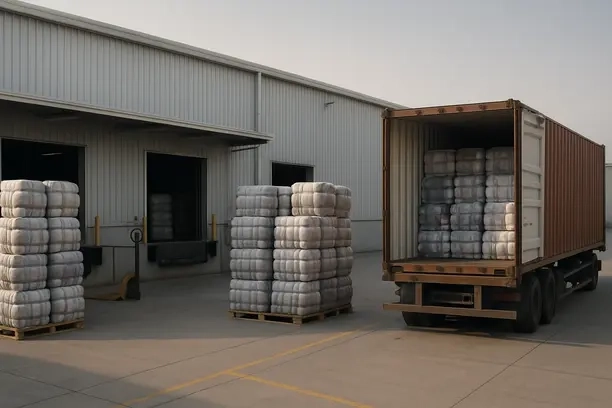
GCI focuses on bulk sales through bale and container load shipments to optimize logistics efficiency. Bale weights vary from smaller units of approximately 45 to 55 kilograms up to large bales and full container loads. This approach supports cost-effective international distribution and aligns with buyer requirements for volume purchasing and consolidated shipments.
Packaging and Delivery Considerations
Packaging is designed to safeguard contents during transit while maximizing space utilization in containers. Lead times for order preparation and shipping consider the scope of sorting and freight arrangements. Buyers are advised to plan accordingly for shipping logistics, customs clearance, and freight charges inherent in international wholesale trade.
Sustainability and Circular Economy Contributions
Through its core business of reprocessing and redistributing used garments, Global Clothing Industries contributes to the circular economy by promoting reuse and reducing textile waste. Their operations help extend product life cycles and provide affordable apparel solutions across diverse markets, underlining a practical approach to sustainability within the wholesale secondhand industry.
Working With Global Clothing Industries
Potential buyers include international importers, large-scale retailers, and market vendors capable of managing substantial order volumes. Prospective partners are encouraged to understand minimum order expectations and may arrange facility visits or inspections to verify product quality prior to purchase.
Global Clothing Industries offers a comprehensive supply chain solution for wholesale buyers seeking sorted, graded secondhand goods suitable for resale across multiple global markets.
Quality standards and item grading are essential for maintaining supply chain reliability in the UK wholesale secondhand market. As a leading supplier, a typical grading process involves sorting secondhand apparel and goods by condition, style, and suitability for different markets. Items generally pass through manual inspection and categorization stages to ensure consistency.
The grading includes general categories such as premium quality items with minimal wear and no defects, suitable for higher-end resale channels. Other categories reflect mid-grade merchandise exhibiting some signs of use but retaining solid resale value. There may also be more basic, mixed-grade bundles for specific market demands, including seasonal or tropical collections.
Inspection aims to determine wear, fabric quality, cleanliness, and overall presentation. Supplier practices typically prioritize accurate descriptions, with detailed sorting by gender, item type, and intended climatic region, to meet buyer expectations in various European and UK resale environments.
Logistics for UK and European wholesale buyers involve reliable preparation of bulk secondhand goods for export. Items are commonly packed in industry-standard bales of various weights, such as small and large bales, to facilitate transport.
Dispatch processes prioritize safe packaging and prompt shipment scheduling. Coordination with freight forwarders and consolidation for container loads are managed to ensure cost-effective and timely delivery. While specific transit times vary by destination, wholesalers generally expect order lead times sufficient to accommodate sorting, packing, and customs clearance procedures.
Packaging is chosen to protect items while optimizing shipment volume, and exporters often provide documentation to support smooth import. Buyers are advised to plan orders with consideration of minimum quantities and consolidated shipments to maximize logistical efficiency.
Commitment to sustainability underpins the reuse of secondhand clothing through circular economy practices. By extending product life cycles, wholesale suppliers contribute to reducing textile waste and environmental impact.
Sorting and reselling secondhand apparel positively affect resource consumption by diverting items from landfills and supporting markets that rely on affordable, quality goods.
- Reuse of garments reduces demand for new textile production.
- Resale networks encourage responsible consumption and distribution.
- Waste reduction is achieved through effective material sorting and redistribution.
Suppliers focus on maximizing reusability, prioritizing quality control to ensure continued wear and usability, thus supporting broader environmental and socio-economic sustainability goals.
Popular Wholesale Categories
Learn more about our most requested mixes and delivery options.