Overview of MILOUD CHIKAR's Wholesale Operations
MILOU D CHIKAR is an established name in the international secondhand clothing industry, known for large-scale wholesale and export operations. While primarily headquartered in Belgium, the company serves markets across Europe including the UK, specializing in bulk supply of recycled textiles for trade buyers and distributors.
Quality Management and Grading Systems
The company implements a rigorous sorting and grading process to ensure consistency and reliability of product quality. Items collected from various donation sources undergo detailed inspections to separate them into distinct quality categories. These cover premium "like-new" garments, high-quality products with minimal wear, and more affordable options showing slight signs of use. Grading allows customers to choose quality tiers suitable for their target markets without reliance on individual piece sales.
Typical Categories in Sorting
- Men's and women's wear sorted by type
- Items graded according to condition and fabric integrity
- Specialized categories like tropical weight clothing tailored for specific regions
Logistics and Export Readiness
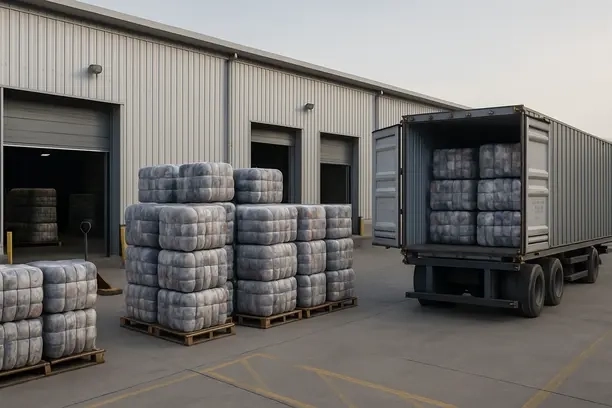
Managing logistics efficiently is central to MILOUD CHIKAR's wholesale model. Sorted textiles are compressed into standardized bales, which are sized to optimize container shipment efficiency. This packaging is robust to protect garments during international transport, supporting exports in 20ft and 40ft container loads.
Shipping schedules are organized to accommodate typical lead times, customs clearance, and transportation requirements, aiming to meet the expectations of international trade buyers.
Market Focus and Sustainability Commitment
Key export destinations include African countries, Eastern Europe, and regions in the Middle East and Asia, where secondhand clothing plays an important economic role. MILOUD CHIKAR emphasizes sustainable practices by promoting textile reuse and minimizing waste, aligning with circular economy principles.
Bulk sorting and grading maximize the reuse potential of secondhand textiles, while also helping reduce the environmental footprint of the global clothing supply chain by extending garment life cycles.
Benefits for Wholesale Buyers
- Access to large volumes of graded clothing suitable for diverse retail markets
- Reliable logistics support tailored for international exports
- Alignment with sustainability goals through focused reuse and waste reduction
Engaging with MILOUD CHIKAR
The company operates primarily through bulk transactions involving tonnage or full container loads rather than small orders. Buyers are encouraged to communicate directly for inquiries related to stock viewing, order customization, and logistical details. MILOUD CHIKAR maintains a presence within key textile trade networks to facilitate connections with international trade buyers, ensuring transparency and trusted partnerships.
As a UK wholesale secondhand supplier, quality control is a critical part of operational processes. Clothing is subjected to thorough sorting and grading procedures designed to categorize items based on condition and usability without claiming specific grading scales. The process often involves visual inspections to separate items into various quality tiers, ensuring that garments meet agreed standards for resale or export.
Key quality considerations include:
- Assessment of fabric integrity and wear signs to identify garments suitable for different market segments.
- Sorting by item type to facilitate efficient distribution.
- Use of well-informed graders who classify products into quality categories such as premium "like-new," high-quality, and more budget-friendly options showing minor wear.
This methodological approach ensures a reliable supply of secondhand textiles that aligns with buyers' expectations while maintaining consistency across shipments.
Logistics operations for a wholesale supplier serving the UK and European markets focus on efficient packaging, dispatch, and readiness for export. Products are typically packed in heavy bales to optimize container space, supporting large volume exports delivered via standard 20ft or 40ft containers.
Core logistical practices include:
- Compression of sorted textiles into standardized bales of varying weights according to client requirements.
- Coordinated dispatch schedules to maintain reliable delivery lead times, which are planned flexibly with consideration for customs clearance and transportation durations.
- Packaging designed to protect goods during transit, minimizing damage and maintaining quality standards upon arrival.
The overall logistics framework supports international wholesale customers by prioritizing volume efficiency and consistent shipment handling.
Commitment to sustainability is integral to the secondhand clothing supply chain. The reuse of textiles supports circular economy principles by extending the lifecycle of garments and reducing waste.
Key elements of sustainability efforts include:
- Sorting and grading processes that maximize reuse potential by ensuring garments are suitable for resale rather than disposal.
- Minimizing textile waste through efficient bulk handling and distribution channels.
- Supporting markets where secondhand clothing provides affordable options and reduces demand for new textile production.
These practices contribute to environmental impact reduction while reinforcing the value of recycled textiles in global wholesale networks.
Popular Wholesale Categories
Learn more about our most requested mixes and delivery options.