Ethical sourcing in used clothes wholesale: what a buyer can ask
A buyer's guide to reasonable questions about origin and handling, and to the limits of what any supplier can honestly claim.
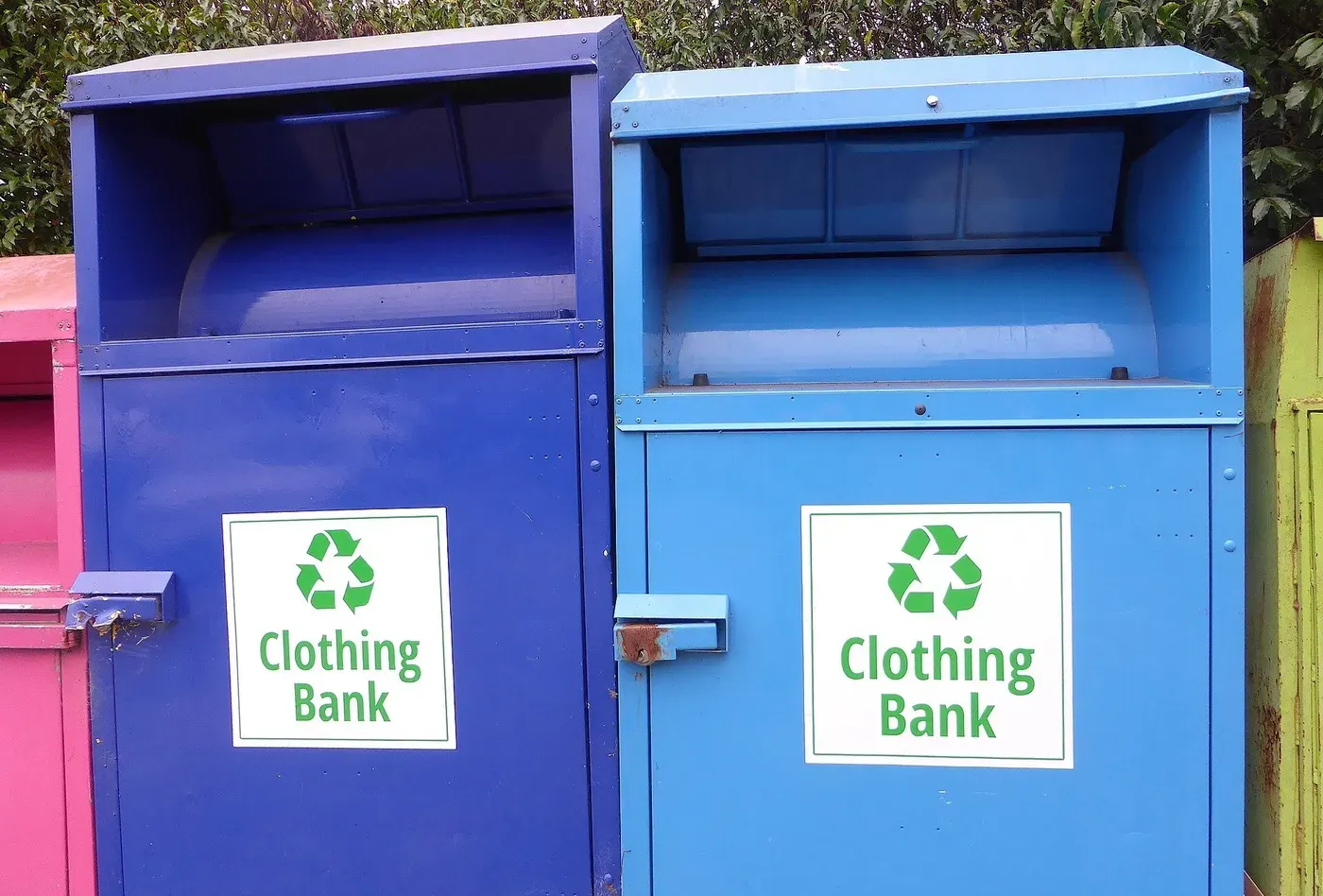
Ethical sourcing used clothes wholesale is a question about what a supplier can honestly tell you: where the goods were collected, what was done to them since, how they are described and what happens to the part that does not sell. No supplier can answer every link. A good answer separates what is known from what is not.
What "ethical" can mean when the goods are already used
For new garments the word usually points to the factory: wages, working hours, child labour, safety. The OECD has a due diligence guidance for exactly that setting, the Garment and Footwear Sector guidance, which was approved by all governments adhering to the OECD Guidelines for Multinational Enterprises and is applicable to all companies, large and small. Its risk areas include child labour, forced labour, wages, working time, health and safety, hazardous chemicals and bribery.
A used garment carries that production history, but a wholesaler of used clothing did not make it and cannot audit the factory. What a used-clothing supplier does control is a shorter chain: how the clothing was collected, how it was handled, what was taken out, how the lot is described and where the unsellable part goes. Those are the links this guide asks about.
The OECD guidance supplies useful habits even outside the factory. It is risk-based, so you address the most serious risks first. It asks companies to look at how their own purchasing practice contributes to risk, and it expects each company in a chain to take responsibility for its own step. Borrow that logic: ask about the steps the supplier performs and stay sceptical of claims about steps it does not.
Ethical sourcing used clothes wholesale: questions you can reasonably ask
A reasonable question is one a supplier can answer from its own records and put in writing. These are the ones that tend to produce useful replies:
- Which product line is this, and how is it described in the offer (unsorted, household collection, shoes, new items with tags)?
- Was anything taken out of the collection before the lot was packed?
- How is the lot packed and weighed, and can you see photos or a short video of it before you confirm?
- What does the offer say about items that are clearly unusable?
- Which countries do the goods travel through, and what paperwork is agreed for yours?
- Who is your contact for a complaint, and in what form must it be made?
Notice what is missing: the name of a collection partner, a donor, a charity or a factory. A supplier that names them without being asked is making a claim you should be able to check. This page does not make such claims for Original Secondhand. What the company commits to is what the written offer says, and the Original D2D and Original Container pages describe the formats.
Origin and traceability: what is realistically available
Traceability in used textiles is thinner than most buyers expect, and public bodies say so. The European Environment Agency (EEA) wrote in 2023 that wholesalers do not always have a clear idea of what finally happens to the textiles they export for reuse elsewhere. It also noted that used textiles are subject to involved trade between EU Member States before leaving the region, so a pile of clothing can pass through several hands.
The Commission's JRC reported in 2021 that in the Nordic countries three quarters of exported used textiles sent for detailed sorting to wholesalers were unsorted originals. The more steps a lot has passed through, the harder it is for anyone to give an exact history.
The same EEA briefing records that the EU textiles strategy mentions a call under the LIFE programme to improve traceability of exports of used textiles and textile waste. That tells you where policy is heading, and it tells you that today's tools are still being built. A supplier who answers "I can tell you the format, the weight and how it was packed, but not the origin of each bag" is giving a truthful answer.
Phrase the question so that "unknown" is an acceptable answer. Ask for the format of the collection, the product line, the weight and the packing. Ask whether the offer can say anything about the country where the goods were gathered. If the supplier cannot, you have lost nothing; if it can, put the statement in writing and keep it with the offer.
How far a small buyer's due diligence needs to go
The OECD guidance describes a whole-of-supply-chain approach, in which a company assesses risks linked to its direct suppliers and those further upstream. It also says how a company carries out due diligence depends on its size, sourcing model and the context of its operations, and that each company in the chain is responsible for identifying and addressing harms.
A reseller with one shop is not expected to do what a global brand does. A proportionate routine is enough: ask for a clear description, keep the answers, record what arrives and revisit the file at the next order. Phrases such as ethical second hand clothes wholesale describe an intention, not a standard, so judge the supplier by what it puts in writing.
What happens to the unsellable part
This is where the topic becomes practical. The EEA's 2024 briefing warns that without more sorting and recycling capacity, significant amounts of collected textile waste will continue to end up in incinerators or landfills or be exported outside the EU, and that textiles discarded during sorting may be landfilled. WRAP's own page on the UK Textiles Pact says that 711 thousand tonnes of post-consumer textiles are discarded in the UK's general waste every year.
For a buyer of used clothing, the responsible move is planning, not a slogan. Know your outlet for pieces that fail your sort before the lot arrives, and ask the supplier whether the offer says anything about clearly unusable items. A lot with no plan for its waste is a cost deferred, not avoided.
What the new EU rules add
Directive (EU) 2025/1892 amends the Waste Framework Directive for textiles. According to the European Parliament's legislative observatory, it requires used textile products, accessories, footwear and waste from them collected separately to be sorted before shipment, in order to combat illegal shipments of waste. It adds that used textiles deemed suitable for reuse should not be considered textile waste.
Member States must set up extended producer responsibility schemes for textile, textile-related and footwear products by 17 April 2028, with an extra year for micro-enterprises, and transpose the directive by 17 June 2027. Producers of textile, textile-related and footwear products carry that responsibility. A reseller of used clothing is a different actor, but the questions below follow from the rules.
The EEA's 2024 briefing says reporting on preparation for reuse is voluntary and that definitions and classification differ widely between countries. In practice this means two suppliers can use the same word for different things. Ask what "sorted" and "fit for reuse" mean in their offer before you compare two quotes.
UK frameworks: Textiles 2030 and the UK Textiles Pact
In April 2021 WRAP launched Textiles 2030, a voluntary agreement whose targets were to cut carbon by 50 percent and the aggregate water footprint of new products sold by 30 percent. WRAP's website now presents it as the UK Textiles Pact and says it is open to brands, retailers and manufacturers, reuse and recycling organisations and other bodies. The targets are measured against new textile products.
That matters for a buyer of used clothing. A supplier's membership of a voluntary scheme is a statement of intent, not a check of its stock, and the numeric targets say nothing about a specific lot of used garments. Ask the supplier what it has agreed to and where you can read it. Original Secondhand makes no claim of membership on this page.
Claims you can make to your own customers
If you resell to consumers, your wording is regulated even when the goods are used. Directive (EU) 2024/825 on empowering consumers for the green transition applies from 27 September 2026 and bans generic environmental claims when a trader cannot demonstrate recognised excellent environmental performance. The Commission's September 2026 Q&A lists examples from the directive's recitals such as "environmentally friendly", "eco-friendly", "green" and "climate friendly". It adds that the directive covers practices towards consumers, not business-to-business dealings.
The directive also says the specification of a claim must be given in clear and prominent terms on the same medium. So an explanation in a footnote on another page does not rescue a headline on a listing or a rail sign.
In the UK, the Competition and Markets Authority's Green Claims Code sets out six key points for checking environmental claims, and the authority published a guide for fashion retailers in September 2024. The practical rule is the same on both sides of the Channel: describe the goods plainly as used, say what is true about this lot, and put the evidence next to the claim.
What a supplier can and cannot state
| Topic | A supplier can state | A supplier cannot honestly state |
|---|---|---|
| Product | Line, product type, weight, packing, as in the offer | Exact contents of each bag, or a brand mix |
| Origin | That goods were sourced in the UK, as the offer says | The history of each piece, or who wore it |
| Handling | What was taken out before packing, if asked and confirmed in writing | What happens to goods after you resell them abroad |
| Outside labels | Only those it actually holds and can show | Any label it does not hold, or a scheme it has not joined |
| Impact | Plain facts about the lot | That the goods are "green" or "good for the planet" |
The right-hand column is the line a responsible used clothing supplier should not cross, and it is the one that protects you. Every claim you pass on to a customer inherits the weakness of the claim you received.
A short routine for a first order
Start with the questions above and send them in one email so the answers can be filed together. Compare the reply with the offer, and note any difference in tone between the two. If the reply promises more than the offer, ask for it to be added to the offer or treat it as not given.
When the goods arrive, check them against the offer and keep the photos; the buyer's quality checks explain how. If you sort the goods yourself, decide in advance where the unusable pieces go, as the guide to unsorted lots explains.
Review after the first delivery. Which answers proved true, which were vague, and which did you not think to ask? The next order is a chance to improve the list, and the supplier's willingness to answer in writing tells you as much as the answers do.
Next step
Write down the three questions that matter most for your customers, send them with your country and product line through the contact page, and ask for the answers in the written offer. A supplier that replies precisely, including what it cannot say, is a supplier you can plan with.
Frequently asked questions
Can a used clothing supplier prove where each garment came from?
Not for each piece. Public bodies note that used textiles pass through several hands and that wholesalers often do not know the final fate of exported goods. What a supplier can state is its own step: line, weight, packing and what was removed, as the offer confirms.
Does buying used clothing from the UK count as ethical?
The word has no legal definition for used goods, so avoid taking it as given. Judge a purchase by what you can verify: a clear description, honest answers about handling and a plan for the unsellable part. Avoid passing on an unsupported label to your customers.
Is a lot with outside labels better than one without?
A label is only as useful as what it covers and who checks it. Ask what the label applies to, whether it covers this lot and where you can read the terms. A plain, accurate offer from a supplier that holds no label can be more reliable than a vague claim.
What happens to used clothing that cannot be resold?
It becomes waste for whoever holds it, and the holder carries duties for its treatment. Public sources describe recycling into wipes or filling, energy recovery and landfill. Decide the outlet before you buy and keep a record of each load that leaves.
Can I use the word eco-friendly when I sell the clothes on?
In the EU, consumer-facing generic claims such as eco-friendly are prohibited from 27 September 2026 unless recognised excellent environmental performance can be shown. In the UK the Green Claims Code applies. Describe the goods as used, keep claims specific and provable, and check the rule in the country where you sell.
How do I record the answers my supplier gives?
Send your questions by email, ask for replies in writing and file them with the offer and delivery photos. If a reply adds a promise the offer lacks, ask the supplier to add it to the offer, because a verbal assurance is hard to rely on later.