Bric-a-brac wholesale from the UK for resellers in Europe
Household odds and ends, curtains and table linen are sold as mixed lots by weight. Here is what is inside, how the rules treat used goods, and what to check.
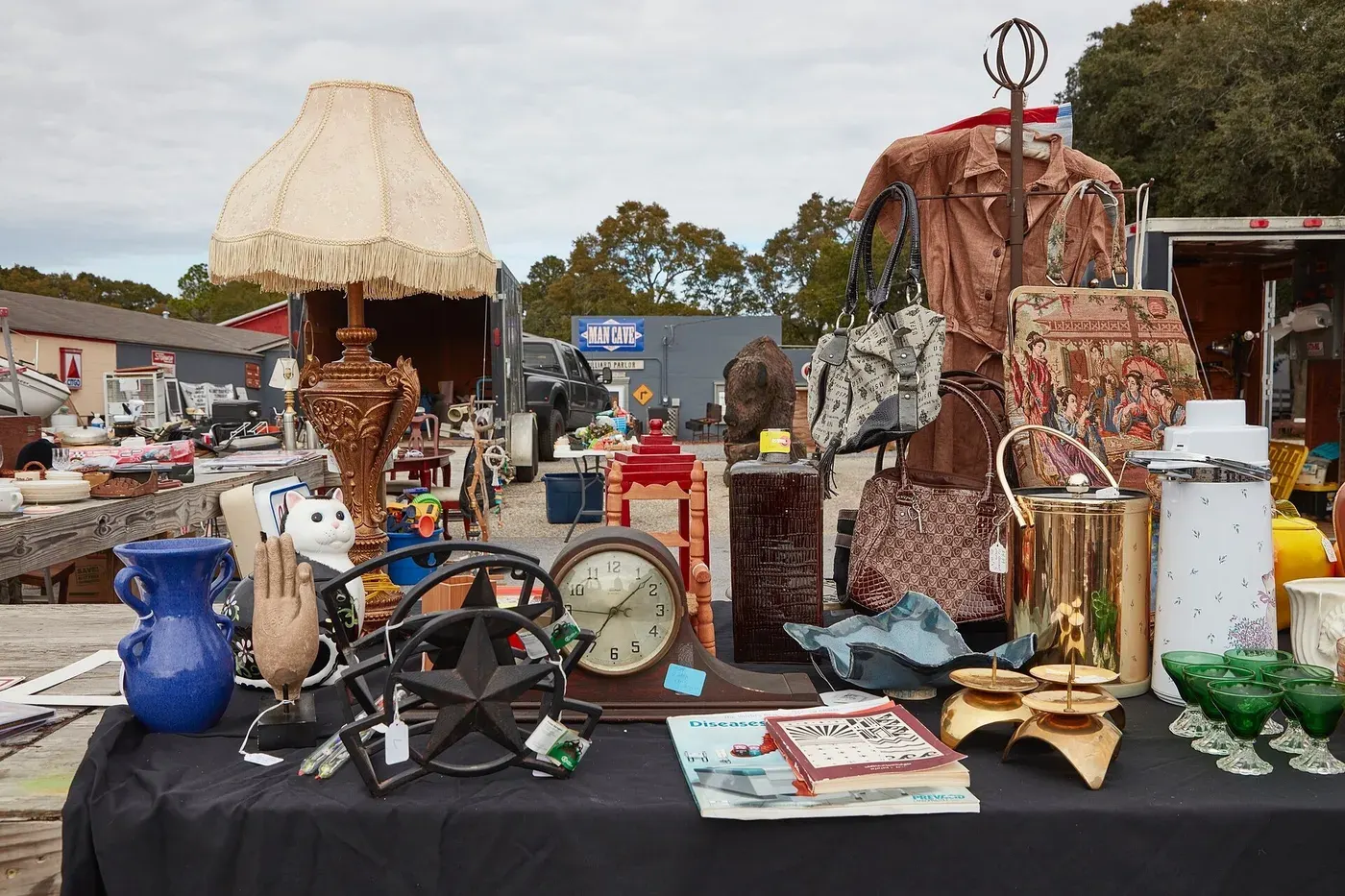
Bric a brac wholesale UK buyers order is a mixed lot of small household goods, curtains and table linen, sold by weight rather than by item. The lot gives a reseller a broad stock of low-ticket pieces for a shop, a market stall or an online store, and its content changes from one lot to the next.
What bric-a-brac means in a wholesale lot
In everyday English the word covers small decorative and practical things that do not fit a clothing rail. On the wholesale side it is a catalog type, listed beside clothing, shoes and toys, and sold as a lot by weight. You are buying a category of goods, not a numbered list of items.
That has a practical consequence. Two lots of the same type will not hold the same pieces, and the photo on the bric-a-brac catalog page is indicative only. Treat it as an example of the kind of goods, and ask for photos or a short video of your lot before you confirm.
What can be inside
The mix follows what ordinary homes hold, which is why one lot looks different from the next. Contents can include:
- household items such as kitchen and dining pieces, storage and small decor;
- curtains and net curtains of different lengths and fabrics;
- table linen, including cloths, runners and napkins;
- small goods that do not belong in another category.
Not every lot contains every item on this list, and nothing here promises a fixed share of any of them. If your customers buy curtains but not ornaments, say so in the enquiry, because the more precisely the need is described, the easier it is to match a lot to it.
Condition varies inside the lot as well. Some pieces can go on a shelf as they are, some need a wash or a wipe, and some are only fit for the cloth pile. Because the lot is sold by weight and not by piece, you accept this spread when you buy, and the way to manage it is to match the lot type to how much cleaning your sales channel can absorb.
How a used bric a brac bulk order is sold and packed
Orders of this kind are described by weight, and the offer confirms the weight, the product type and the packing. Soft goods such as textiles travel well in bags. Breakable goods are a different matter, and it is fair to ask how glass and ceramics are separated from the rest, and what damage is acceptable in a mixed lot.
Goods go from the UK to European customers by road, with a sea or tunnel crossing on the way. Customs paperwork depends on the destination and is agreed per order, so tell the sales team where the goods will be unloaded when you first write.
The textile part of the lot and the customs tariff
A bric-a-brac lot is not one commodity, and the UK Trade Tariff reflects that. Note 3 to chapter 63 says heading 6309, "worn clothing and other worn articles", applies only to listed goods: articles of textile materials such as clothing, blankets, bed, table, toilet and kitchen linen and furnishing articles, plus footwear and headgear. They must show appreciable wear and be presented in bulk or in bales, sacks or similar packings.
Household items that are not textile or footwear are outside that list. A plate, a vase or a cutlery set is classified by what it is, in the chapter for ceramics, glass, plastics or metal. The table shows how the tariff names some of the families you can meet in a lot.
| Family in a lot | Tariff heading | Heading as the tariff words it |
|---|---|---|
| Table and bed linen | 6302 | Bed linen, table linen, toilet linen and kitchen linen |
| Curtains | 6303 | Curtains (including drapes) and interior blinds; curtain or bed valances |
| Other soft furnishings | 6304 | Other furnishing articles |
| Worn textiles in bulk | 6309 | Worn clothing and other worn articles |
| Porcelain tableware | 6911 | Tableware, kitchenware and other household articles of porcelain or china |
| Other ceramic tableware | 6912 | Ceramic tableware, kitchenware, other household articles other than of porcelain or china |
| Glassware | 7013 | Glassware of a kind used for table, kitchen, toilet, office, indoor decoration |
| Plastic housewares | 3924 | Tableware, kitchenware and other household articles of plastics |
| Cutlery | 8215 | Spoons, forks, ladles and similar kitchen or tableware |
Headings 6302 to 6304 describe made-up household textiles in general, while heading 6309 is the one that fits worn goods in bulk. Which heading applies to your mixed lot, and whether it must be split by product, is a point to agree with your customs agent before the goods move, since a lot with many types may need more than one line on the declaration.
Hard goods: kitchenware and food contact
Plates, cups and cutlery are meant to touch food, and EU law has a general rule for that. Regulation (EC) No 1935/2004 applies to materials and articles that are intended to be brought into contact with food, and also to those that are already in contact with food and were intended for that purpose.
Under Article 3(1) they must not transfer constituents to food in quantities that could endanger human health, bring about an unacceptable change in the composition of the food, or bring about a deterioration in its organoleptic characteristics.
How that applies to used pieces in a mixed lot is a question for your adviser, but the practical reading is clear enough. A chipped cup, a crazed glaze or a heavily scratched non-stick pan is not something a careful reseller puts on a shelf as tableware. Set those aside at sorting and keep the sound pieces for sale.
Used, antique or to be repaired: what product safety law says
Product safety law is built around the consumer, and it treats used goods in a particular way. Directive 2001/95/EC defined a product as one intended for consumers or likely to be used by them, whether new, used or reconditioned, and it carved out second-hand products supplied as antiques or to be repaired or reconditioned prior to being used, provided the supplier clearly informs the person supplied.
That Directive was repealed from 13 December 2024 by Regulation (EU) 2023/988. Article 2(3) of the new text says it applies to products placed or made available on the market whether new, used, repaired or reconditioned, and does not apply to products to be repaired or reconditioned before being used where they are clearly marked as such.
It also defines antiques as products, such as collectors' items or works of art, which consumers cannot reasonably expect to meet state-of-the-art safety standards.
On the British side, the General Product Safety Regulations 2005 define a product in similar words, covering goods intended for consumers or likely to be used by them, supplied in the course of a commercial activity, whether new, used or reconditioned.
The message for a reseller is the same on both sides: used does not mean out of scope. If you sell something as "for repair" or as a collector's piece, say so plainly and in writing, and do not describe it in any other way.
Antiques and collectors' pieces in the tariff
Bric-a-brac sometimes includes older or collectable pieces. The UK Trade Tariff has two headings for them: 9705, collections and collectors' pieces of archaeological, ethnographic, historical, zoological, botanical, mineralogical, anatomical, paleontological or numismatic interest, and 9706, antiques of an age exceeding one hundred years.
Most of what a mixed lot holds will be nowhere near these, and no lot is sold on the strength of such a piece, but a reseller who finds one should treat it separately from the ordinary stock.
Describing a piece you are unsure about
- say what it is and what you can see, not what you hope it is;
- state visible damage, repairs and missing parts in the listing or on the label;
- mark items sold for repair, display or collecting as such, in writing, at the point of sale;
- keep electrical, battery-powered and heated items out of the general stock until someone has looked at them properly.
The last point is a matter of ordinary caution and not a rule quoted from a source. If a lot arrives with items of that kind, take advice before offering them to customers.
Used goods are not waste: the re-use idea
EU law draws a line between waste and goods in use. Article 3(1) of Directive 2008/98/EC defines waste as any substance or object which the holder discards or intends or is required to discard, and Article 3(13) defines re-use as an operation in which products or components that are not waste are used again for the same purpose for which they were conceived.
Article 3(16) describes preparing for re-use as checking, cleaning or repairing.
The reason this matters to a buyer is practical. The lot you order is meant to be sold on, not discarded, and checking and cleaning pieces before resale is the kind of activity the Directive calls preparing for re-use. Whatever you cannot sell on leaves the re-use chain, and the rules for disposing of it are national and local; ask your adviser what applies where you trade.
Who resells bric-a-brac and how
Buyers in this category are usually small and flexible. Market traders sort a lot on the day it arrives and price pieces on the table. Second-hand shops pick out the items that sell and move the rest into a bargain bin. Online sellers photograph the better pieces one at a time and list them separately.
Each of these sellers needs a different thing from a lot. A stall wants volume and variety, a shop wants clean, display-ready pieces, and an online seller wants a few items that stand out. Decide which one you are before you ask for an offer, because the answer changes which lot type fits.
UK household items wholesale: what to ask before you order
When you source UK household items wholesale, the questions that save money later are about content and handling rather than price. Ask what the lot is mostly made of, whether textiles and hard goods arrive in separate bags, and how the lot was assembled.
Ask also whether the offer lists the weight as the net weight of goods or includes the packing, and what the product line is. Bric-a-brac can sit beside clothing in a combined order, but it is a separate product type, so the offer should name it separately. The minimum order depends on the product line and is confirmed in the offer, so there is no figure to quote here.
Hygiene and condition checks on arrival
Open a sample from several bags before you open the rest. Look for damp, mould smell, insect activity, stained linen, broken glass and anything sticky or leaking. Photograph what you find with the bag it came from, because a photograph with context is far easier to discuss than a description.
Wash textiles that you intend to sell as usable, and keep them apart from hard goods while you do. Wipe or wash hard goods before display.
Pieces that fail on hygiene or safety grounds should not be offered to customers at all, and the rest can be priced to match what you find. Our guide to quality control on delivery shows how to record the results in a form you can send to a supplier.
Displaying and pricing a mixed pile
Small goods sell faster when the shopper does not have to decode a price on every piece. Many sellers price by group or by pile: one level for a basket of mugs, another for a stack of napkins, a third for cloths. That keeps sorting quick and stops small items from getting lost in the stock list.
A stall needs only a few price groups, while a shop with a window needs more, because display standards are higher. Pieces that have not sold by the end of a season are best gathered into a single bargain basket instead of staying in prominent places, where they make the whole display look tired.
Sorting it once it arrives
Plan a space to open the bags and sort. A simple split into textiles, kitchen and dining, decor and a leftover pile covers most lots. Clean what needs cleaning before it goes on a shelf; stained linen goes into a separate pile for cloths or for sale as it is, depending on your market.
Keep a note of what sold quickly from the first lot. After two or three orders you will know which pieces to ask for and which to tell the seller you do not need. Details on how clothing lots are graded are in the guide to sorting used clothes, and the logic carries over to mixed household goods.
Next step
Write down what you sell, how much shelf or stall space you have and whether you need textiles only. Then send the note with a request for photos of a current lot through the contact page, and compare the written offer with the other product lines in the product overview.
Frequently asked questions
Are the items in a bric-a-brac lot sorted by type?
Not necessarily. Lots are mixed, and sorting depends on the product line and the offer. If you need textiles apart from hard goods, ask for that in the enquiry and check the written offer to see what is stated about the lot.
Can I buy only curtains or only table linen?
Ask. The offer describes what a given lot holds, and a request for a narrower selection may or may not match a lot that is available. Say which textile you resell and the written offer will show whether it can be supplied.
Will fragile items arrive intact?
Breakable pieces in a mixed lot can be damaged in transit, as with any household goods in bulk. Ask how they are packed, note damage on arrival, and report problems in writing after delivery with photos of the goods.
Do I get to see the lot before I confirm?
Photos or a short clip of the actual lot can be requested ahead of confirmation. Pictures in the catalog are indicative only, and material from the real lot is the better basis for judging whether it suits your market.
Which tariff heading covers a mixed bric-a-brac lot?
There is no single heading. The UK Trade Tariff names textiles in 6302 to 6304 and worn textiles in bulk in 6309, while plates, glass and cutlery sit in their own headings. Agree with your customs agent how a mixed lot is declared.
Do product safety rules apply to used household goods?
The EU General Product Safety Regulation applies to products whether new, used, repaired or reconditioned, and the UK 2005 Regulations also cover used goods. The EU text excepts products clearly marked as to be repaired or reconditioned before use, so label such items clearly and ask your adviser.