Used clothes sorting wholesale explained: category, season, grade
Sorting decides what a wholesale lot is worth to your shop. This page follows the clothes from collection to bale and shows what to confirm in writing.
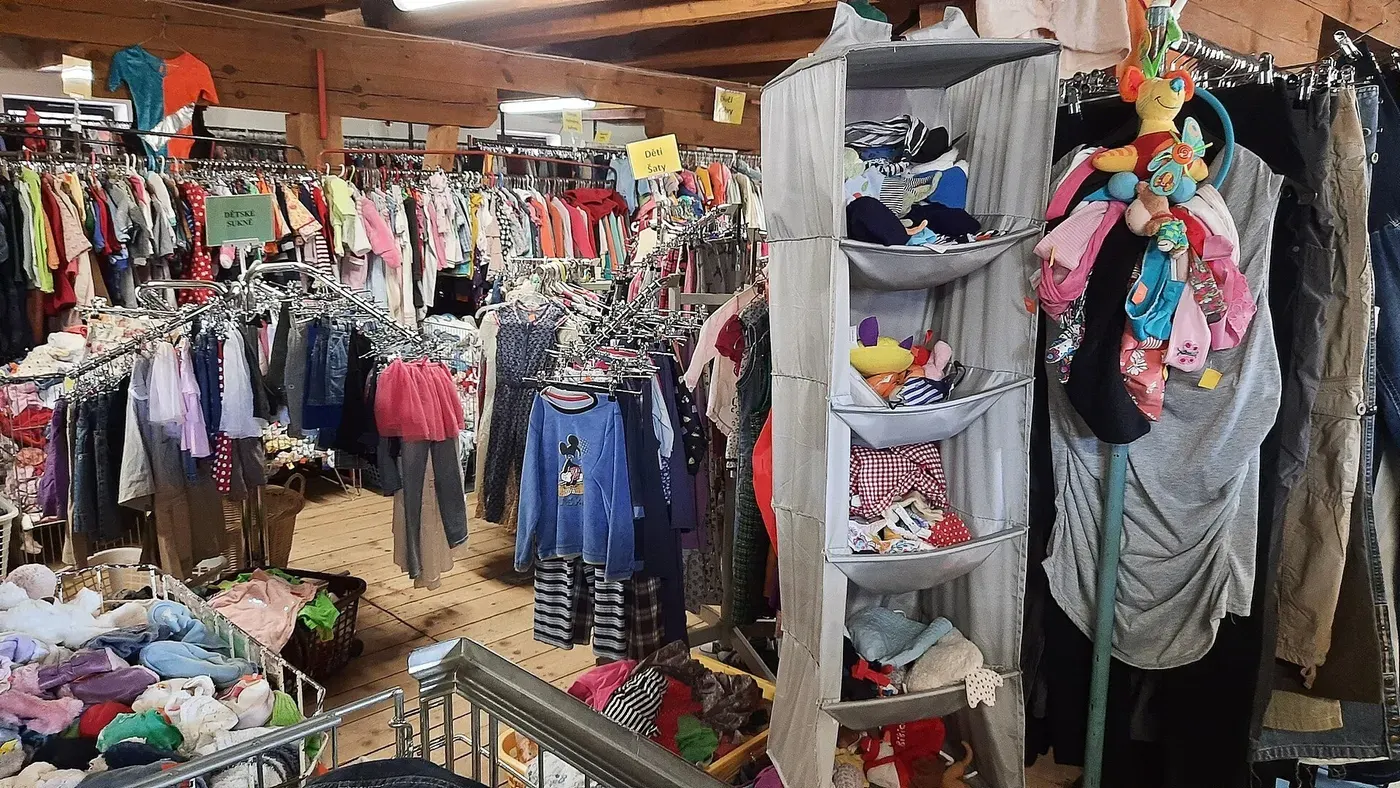
In used clothes sorting wholesale, collected garments are split by what they can still do: be worn again, be recycled into new material, or be discarded. Wearable pieces are then divided by garment type, season and quality grade, and packed as lots. Because every sorter draws these lines itself, the terms need to be written into the offer.
Where the clothes come from before they are sorted
Sorting starts with the way textiles are collected. The Fashion for Good and Circle Economy report of 2022 notes that in France and Germany most separately collected textiles arrive through bring banks, with shares as high as 78 and 88 percent. In the UK the predominant mode of collection is the charity shop, at 48 percent, with bring banks the second most common method.
The route matters because it shapes the contents. The same report observes that bring banks generate high volumes but carry more risk of household waste being mixed in than indoor collection does, while kerbside collection costs more and has a higher theft risk. A sorter that takes in bank material faces a different first step from one that receives shop leftovers.
Door-to-door collections are another route. Original D2D is built from clothing gathered from households and sold as a wholesale lot, so the way the goods were gathered is part of what the lot is. Ask any seller how its goods were collected before you ask how they were sorted.
Who sorts, and how much capacity there is
Sorting is industrial work in specialised centres. The same Fashion for Good report puts estimated annual sorting capacity in 2020 at about 40 thousand tonnes in Spain, 200 thousand in Poland and 234 thousand in the Netherlands. It also notes that in the Netherlands 55 percent of collected textiles are sorted abroad, while most of the local capacity is used for textiles from Germany.
UK numbers come from WRAP, the UK resource charity. Its Textiles Market Situation Report 2024 states that around 1.45 million tonnes of used textiles were generated in the UK in 2022, that around 650 thousand tonnes were diverted to reuse and recycling from end-of-life disposal, and that around 420 thousand tonnes were exported. WRAP adds that almost half of all used textiles in 2021 ended up in general waste.
These figures explain why a buyer should not assume a lot has been sorted to the same standard as another: the industry is spread across many countries, with different feedstock, different capacity and different customers.
The people on the floor matter as much as the machines. The Reflow booklet says the work is done by skilled workers trained to recognise valuable products, that the first step is always to separate non-textile waste from textile, and that the amount of non-textile waste in textile containers is increasing. It also notes that the financial margins of textile sorters are very thin, which is why sorters watch every step.
Ask your supplier where the sorting takes place. A seller that sorts in its own centre can describe the criteria directly, while one that buys sorted material from another centre can only pass on what it was told. Neither route is a fault, but the second one deserves a question about the original description.
Used clothes sorting wholesale starts with three destinations: reuse, recycling, waste
The European Environment Agency defines the two good outcomes in its briefing on textiles in the circular economy: reuse means using items again as they are, while recycling involves breaking them down to make new products. Waste is what is left when neither is possible. Every sorting floor answers the same three questions for every item that comes in.
The EU's revised Waste Framework Directive (Directive (EU) 2025/1892, published in the Official Journal on 26 September 2025) states in its recitals that reuse should be the main objective of sorting operations, followed by sorting for recycling. Items that professionals judge not fit for reuse go to the recycling streams.
This hierarchy sets the value of your lot. A bale of wearable clothing is the output of the first stream only, and its quality is a measure of how carefully that stream was separated from the others.
How second hand clothes are sorted into categories
Within the reusable stream, the work is a matter of labels. Typical axes are the garment type (jeans, outerwear, knitwear, tops, activewear), the wearer (men's, women's, children's), the season and the quality grade. The Project Rewear report (Fashion for Good and Circle Economy, May 2026) uses five archetypes in its sample: jeans, outerwear, activewear, sweaters and t-shirts.
| Sorting axis | What it separates | What to ask a seller |
|---|---|---|
| Garment type | Jeans, coats, knitwear, tops, dresses, sports clothing | Which types are in the lot and in what proportion |
| Wearer | Men's, women's, children's | Whether they are packed apart |
| Season | Summer and winter pieces | Which season the lot represents and how it was stored |
| Quality grade | The tier the seller names, from the top level down | What separates this tier from the next |
| Size and style | Size spread, casual or formal, sports | How these are described in the offer |
The more axes a seller uses, the more the lot will look like what you asked for, and the more labour sits inside it. A coarse sort is not a fault, but it should be described as coarse.
Treat the list as a base for the written description. For each axis the offer should either state the value, for example women's and autumn, or say that the axis is not applied.
Sorting grades in used clothing: why names differ between suppliers
The Fashion for Good report states that textile sorters categorise textiles to meet the specific requirements of their clients, so all sorters have different product categories. Project Rewear reports that participating sorters normally use between 100 and 300 grades. With so many divisions, the common labels cream, extra, grade 1 and grade 2 are a rough summary, not a scale.
Two sellers may call the same garment first grade and second grade, or one seller may use a letter and another a number. The guide on what the cream grade means looks at the top label in detail. For any label, the useful question is what the seller does with a garment that just misses the tier.
Project Rewear is open about the problem: its own A to C grades were created for the study only, to align the sorting methods of different facilities, and were defined by the financial value as perceived by the sorters. If researchers need a special scale to compare sorters, a buyer should not assume that two price sheets use one.
One practical test works with any label: ask for the three garment types that are most common in the tier and the three most frequent reasons why a piece is rejected from it. The answer shows the real criteria more clearly than the name does.
Season and garment categories
Sorting follows the calendar. The Fashion for Good project took its samples in two rounds, autumn and winter 2021 and spring and summer 2022, to account for seasonal changes in the garments entering sorting facilities. The Reflow project adds that winter clothing is usually collected in spring while demand rises in autumn, so goods often have to be stored for five to six months.
Categories also behave differently in the recycling stream. The Fashion for Good study found that tops such as sweaters and t-shirts are over-represented among textiles that cannot be reused, while home textiles are under-represented: they were only 5 percent of the research sample but 19 percent of the volume consumed in the EU, because home textiles can often be resold on global second-hand markets.
For your orders, this means that a category and a season in the offer carry real information. A lot of bed linen or knitwear is a different product from a lot of summer tops, whatever the grade name.
What happens to the pieces that are not sold as clothes
Not every garment is worn again. The Reflow booklet explains that non-reusable products are sorted by material (wool, cotton, polyester, blends), by structure (knitted or woven) and by product category, and then sold to processors. Bed linen is mostly sold to the wiper industry, and jeans are shredded and turned into non-woven material for heat and noise insulation in vehicles.
The Fashion for Good study estimates that non-reusable textiles are around 26 percent of what sorters handle but account for 10 percent or less of a facility's revenue. The same study notes that approximately 6 percent of the sorted volume is now low-value reusable clothing for which sorters struggle to find financially viable end-markets, mostly because the global second-hand trade is saturated and the quality of incoming textiles is falling.
A rag stream exists for what cannot be sold as clothing. That is why a well-sorted wearable lot carries a smaller share of such pieces, and why you should ask what happens to them: are they removed before packing, or do they stay in the bale?
Customs codes and legal status of sorted and unsorted textiles
In the UK Trade Tariff, heading 6309 covers worn clothing and other worn articles, and heading 6310 covers used or new rags, scrap twine, cordage, rope and cables, with the 6310 commodity codes split into sorted and other. The EEA explains that code 6309 should be used for textiles fit for reuse and 6310 for textiles unfit for reuse, but that the classification does not necessarily describe the true state of what is exported.
A code is a statistical label. It does not tell you the tier of your lot, so do not accept it in place of a description. The code for the actual shipment is settled by your customs agent.
Waste law adds another dimension. Another recital of the 2025 directive says used textiles that are separately collected should be considered waste upon collection, and that items assessed as fit for reuse should not be considered waste textile. The Environment Agency's guidance for England says that textiles are non-waste only if suitable for direct reuse, and that sorting should be done before export, or evidence held to show why it is not needed.
How the formats relate to sorting
Original Secondhand sells in product lines. Original Container means an unsorted collection sold as it comes, for buyers who sort themselves, and the guide on unsorted used clothing wholesale explains that choice. A door-to-door lot has its own description, and shoe lots, covered on the second hand shoes page, are a separate stream.
Goods are sold in bulk by weight and by product line, and the written offer confirms the contents. Photos and descriptions stay indicative, because weight, condition and style vary by lot. If you want a sorted lot, say so in the enquiry and ask how the sorting was done; if you prefer to sort yourself, say that instead, and the written offer confirms what the lot is.
What to confirm in writing before you order
- How the goods were collected and who sorted them
- The axes used: garment type, wearer, season, grade, size
- The written description of the tier, and what separates it from the next
- What is done with pieces that do not fit the tier, and whether they stay in the bale
- Packing: bags or bales, number, declared weight
- Photos or a short video of your lot before you confirm
The quality control guide shows how a lot is checked before dispatch. Complaints go in writing after delivery, so ask how a complaint is handled while the offer is still open.
A practical next step
Write down the categories you resell, the season and the size range, and say whether you want a sorted lot or an unsorted one. Use the contact page or write to [email protected] with that list. The offer that comes back should describe the sorting in the terms above, so that you can compare it with any other quote on the same basis.
Frequently asked questions
What is the difference between sorted and unsorted used clothing?
Sorted clothing has been separated into streams and grades, so a lot is described by type, season and tier. Unsorted material is sold as collected and the buyer sorts it. The offer should say which of the two it describes, because they carry different amounts of work.
How many grades do sorters use?
There is no fixed number. The Project Rewear report says participating sorters normally use between 100 and 300 grades, and that its own A to C scale was made for the study. Common labels such as cream, extra and grade 1 are a rough summary of those steps.
Does the customs code tell me the grade of a lot?
No. The EEA explains that code 6309 is meant for textiles fit for reuse and 6310 for rags, but that the classification does not necessarily describe the true state of what is exported. Use the written description of the lot to judge quality.
Why does the season matter in sorting?
Winter clothing is usually collected in spring while demand rises in autumn, so stock may be stored for months, as the Reflow project notes. A season stated in the offer tells you which part of the year the lot suits and how long it may have been held.
What happens to garments that do not make the wearable grade?
They go to other streams. The Reflow booklet says non-reusable items are sorted by material, structure and product type and sold to processors, for example bed linen to wiper makers and jeans to insulation. Ask whether such pieces are removed before packing.
Can I ask how a lot was sorted before I order?
Yes, and you should. Ask who sorted the goods, which axes were used and what separates the tier from the next one, and ask for photos or a short video of your lot. The written offer confirms the answers, and photos stay indicative only.