Wholesale second hand clothing formats: D2D, container, shoes and STOCK
Four formats, four different jobs for the buyer. A plain comparison of what each contains, how lots are packed and moved, and who each fits.
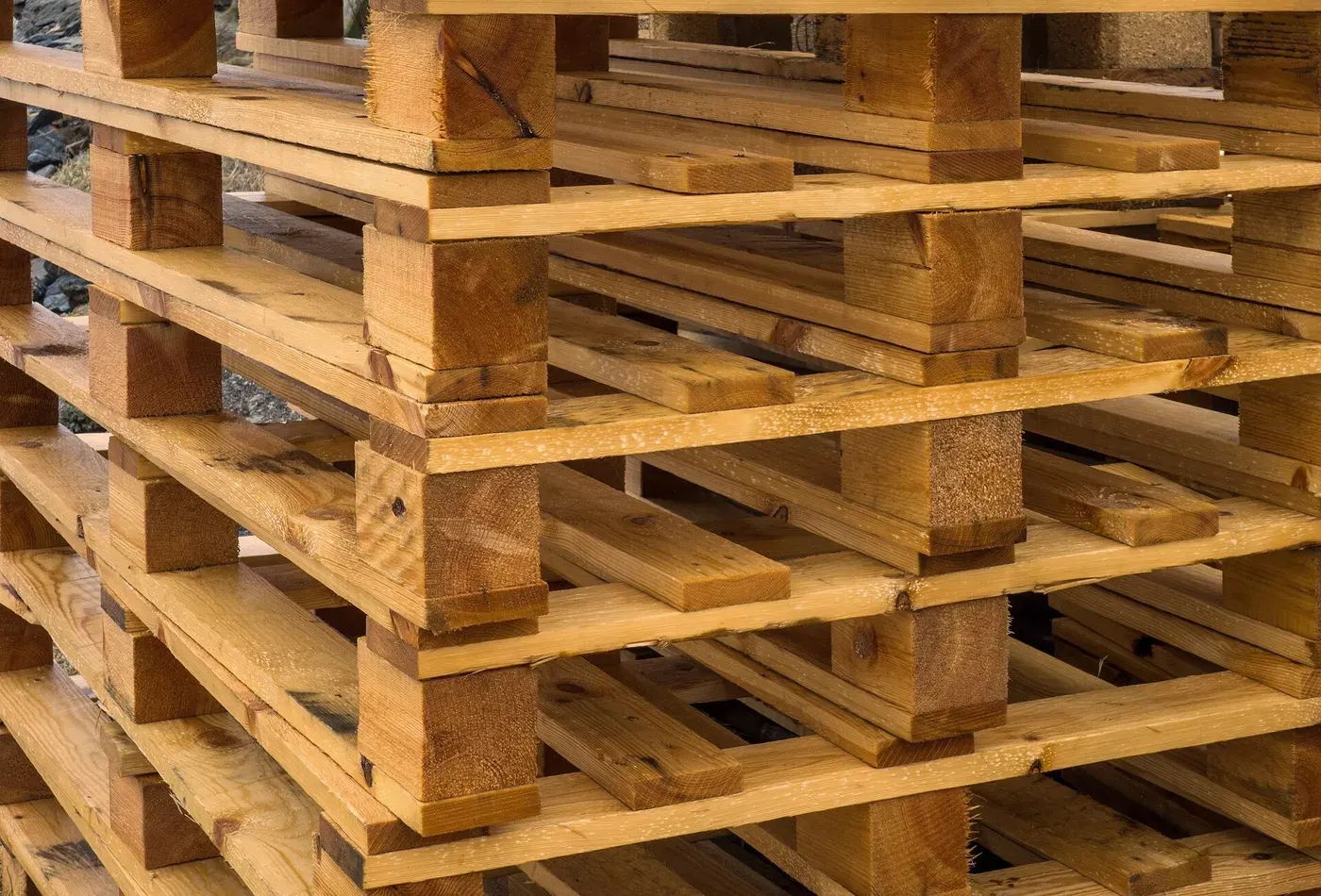
The wholesale second hand clothing formats on this site come in four kinds: Original D2D, which is door-to-door household collections; Original Container, which is unsorted collections; shoe lots; and STOCK, which is new items with tags. They differ in how much sorting you do and what the offer can confirm. The right one follows from how you resell.
Wholesale second hand clothing formats side by side
| Format | What it is | Who it suits |
|---|---|---|
| Original D2D | Clothing collected from households, sold as a wholesale lot | Shops and traders who want a collected lot described on a product page |
| Original Container | Unsorted collections, sold as they come | Buyers with their own sorting and several sales channels |
| Second hand shoes | Shoe lots | Sellers with footwear shelves and customers |
| STOCK | New items with tags, brands and contents confirmed in the offer | Buyers who want new goods and will read the offer closely |
In all four, goods are sold by weight and by product line, and weight, condition and style vary by lot. The table shows the logic, not a promise about any particular lot.
D2D vs container second hand: the central choice
Most buyers weigh these two against each other. D2D comes from households, so the goods arrive as people wore and kept them, packed as a wholesale lot. A container is unsorted: nobody has pulled out the best or the worst, and the result of sorting belongs to you.
The difference is where the work and the risk sit. With a container you carry more work, and the lot can reward you if you have the people and a sales outlet for each type of piece. With D2D you start from a collected lot and decide on the strength of the product page and the written offer. Neither is better in general; each fits a particular way of trading.
For a closer look at how unsorted goods are handled once they reach you, read our piece on unsorted used clothing, and for the sorting step itself the article on sorting used clothes.
Shoe lots: a separate decision
Footwear does not behave like clothing. Sizes are strict, pairs must be matched, and a customer who wants shoes comes for shoes. For that reason the shoe lots sit in their own format with their own page.
A shop that already sells clothing can add shoes as a second shelf, though only if it has the space and a customer base for them. Ask the offer to describe the lot in footwear terms and check what is said about condition, since wear on soles and heels changes sales more than a label does.
The tariff treats the two differently as well, which matters when paperwork is drawn up.
Note 3 to chapter 63 of the UK Trade Tariff lists "footwear and headgear of any material other than asbestos" among the goods that heading 6309 can cover, provided they show appreciable wear and come in bulk or in bales, sacks or similar packings. Chapter 64, the footwear chapter, says in its first note that it does not cover worn footwear of heading 6309.
STOCK: new items with tags
STOCK is described on the site as new branded clothing with tags. Brands and contents are confirmed in the offer, and no brand is assured in advance. That makes STOCK a format where the offer document matters more than anywhere else, so read it as you would read a purchase order.
Every format has questions that the offer should answer, and they are not the same for each. For D2D, ask what the lot description says and how it is packed. For a container, ask how the lot is sold and weighed. For shoes, ask about condition and the mix of types. For STOCK, ask for the brands and the contents, in writing.
STOCK suits a buyer who sells new-looking goods and needs the tag to be part of the story. It is a poor fit for a buyer who wants the lowest-risk start and has no way to check the contents against a plan.
Second hand wholesale lot types by product
Beyond the four formats, the catalog splits goods by product type: sweatshirts, jackets, shoes, toys, bric-a-brac, bedding and more, all sold as lots by weight. A format tells you how the goods come, and a product type tells you what the goods are. You make two choices, not one.
A reseller of children's wear and a reseller of home goods might pick the same format and different product types. The catalog lists the types, and you can name the exact type in your enquiry.
Bulk, bales, sacks, boxes: how a lot is packed
Packing is part of the format, and it affects what you can check on arrival. The tariff wording is a useful hint about the trade: heading 6309 is for worn goods "presented in bulk or in bales, sacks or similar packings". The offer should say whether your lot comes in bales, sacks, cartons or loose, and you should ask if it does not.
Packing changes the way you open and count a lot. A bale gives a firm unit that is hard to open partway, a sack gives a looser unit that is easy to sample, and a carton can be opened shelf by shelf. Plan staff, table space and a scale to match.
Decide before the lot arrives where the first sample will be drawn.
Because lots are sold by weight, ask what the weight in the offer refers to. A figure that includes straps, sacks and pallets differs from one that covers the goods alone, and the gap matters when you reconcile the delivery against the invoice. Ask also how the weight will be confirmed when the lot arrives, so that you and the supplier are comparing the same number.
Mixed lots and selected lots
A mixed lot contains whatever the collection produced across product types, and a selected lot has been narrowed to one type, one season or one quality. The narrower the selection, the more specific the description can be and the less is left to chance, but the more the choice has already been made for you.
The formats on this site sit at different points along that line: a container at the unselected end, shoe lots and product-type lots in the middle, STOCK as a separate stream of new items. Where a lot sits is not a ranking. It is a question of whether you would rather sort or rely on someone else's description.
From packing to pallets: sizes that matter
When goods travel on pallets, the pallet fixes how much space a unit takes. The EPAL load carrier range gives published sizes, and they are a handy reference when you plan receiving space:
- EPAL Euro Pallet (EPAL 1): 800 by 1,200 mm, height 144 mm, safe working load 1,500 kg;
- EPAL 2: 1,200 by 1,000 mm, height 162 mm, safe working load 1,250 kg;
- EPAL 3: 1,000 by 1,200 mm, height 144 mm, safe working load 1,500 kg;
- EPAL 6 half pallet: 800 by 600 mm, height 144 mm, safe working load 750 kg.
These are the pallets' own figures, not the dimensions of a lot. A lot may be stacked, wrapped or loaded without a pallet, and the offer is where the actual arrangement for your order is stated.
Wooden pallets and the ISPM 15 mark
Pallets are made of wood, and wood can carry pests. The European Commission's factsheet on wood packaging material says that packaging entering the EU from all third countries except Switzerland should be made of debarked wood, receive an approved treatment and carry the official ISPM 15 mark. The factsheet names pallets, crates and packing cases among the packaging that can carry harmful organisms.
It excludes wood of 6 mm thickness or less and processed wood such as plywood.
On the British side, the GOV.UK guidance on wood packaging says solid wood packaging includes pallets, box pallets, boxes, crates and dunnage, and tells exporters to check whether the destination country accepts ISPM 15 and has other requirements. It adds that packaging that does not follow the rules could be rejected or destroyed. An EPAL pallet carries a plant-protection mark and the treatment method, heat treatment, among its markings.
For a buyer the sensible step is a question: do the wooden pallets or crates used for my order carry the mark, and who is responsible if they do not? Whether the EU rule applies to a particular shipment from the UK is for your customs agent to confirm.
What fits on a lorry
Goods go from the UK to European buyers by road, so the vehicle sets the outer limits. Directive 96/53/EC, in Annex I, sets maximum dimensions for an articulated vehicle of 16.50 m in length, 2.55 m in width and 4.00 m in height, and a maximum weight of 40 t for the five-axle combinations it lists.
The vehicle that collects your order may be smaller than these limits, so the offer is the place to confirm what is planned.
Loading is also a legal matter.
Regulation 100(2) of the UK Road Vehicles (Construction and Use) Regulations 1986 says the load must at all times be secured, if necessary by physical restraint other than its own weight, and positioned so that neither danger nor nuisance is likely to be caused by the load or any part of it falling, being blown off or moving in relation to the vehicle.
Bales, sacks and cartons all need to be arranged so that they are stable in transit, which is one more reason to ask how your lot will be packed and loaded.
Matching a format to your sales channel
A physical shop with a rail, a market stall, an online listing business and a trader who sells on to other traders all use the same goods differently. A rail shop wants a lot it can put out in a few days, with the sizes and seasons its customers ask for. An online seller wants items that photograph well and can be described honestly one by one.
A trader who supplies other traders cares most about the plain mechanics: weight, packing, how quickly the lot can be opened, split and loaded again. For that kind of resale an unsorted format can make sense, because the sorting work is the business. For a small shop starting out, it often does not, because the sorting work is a cost with no matching income yet.
What to compare when two offers arrive
- the format and product type, named in the same words in both offers;
- the weight of the lot and how it is packed: bales, sacks, cartons or loose;
- what is described and what is only possible, especially for brands and for condition;
- the arrangement for loading and the vehicle, as far as the offer states it;
- the payment and delivery terms, which are agreed per order in writing, and the period for complaints after delivery.
Put the answers side by side before looking at anything else. A line missing from one offer is a question to send back, not a reason to assume the best.
Why formats should not be mixed up in a comparison
A common mistake is to line up four quotes and pick the one with the lowest-looking number. That treats a container, a collected lot, a shoe lot and a lot of new items as the same goods, which they are not. Compare within one format first and across formats only on the question of what each lets you resell.
It also helps to keep the formats apart in your own planning. A shop can run D2D for the general rail, a small shoe shelf next to it, and a separate plan for STOCK. Mixing them in one spreadsheet column hides which one earns its space.
Three questions that settle the choice
- Who sorts? If you have the people and the space, a container is possible. If not, a collected lot or STOCK is easier to manage.
- Who buys from you? Footwear and new items attract different customers from mixed clothing, and your answer limits the formats.
- How closely will you read the offer? A format with firm confirmations needs more reading; one sold as it comes needs more sorting.
Answer them honestly, in writing, before you contact anyone. Two or three lines of notes already narrow the field to one format and one product type.
Where to go from here
The minimum order is not a fixed figure on this page, since it depends on the product line and is confirmed in the offer. Tell us the format you are leaning towards and how you resell, then write to us and ask for a written offer on that format.
Frequently asked questions
Which format is easier for a first order?
It depends on who sorts. A buyer with a team and space may start with a container, while a shop without a sorting area often starts with a collected D2D lot. Decide by your own capacity, then compare offers in writing.
Does a container cost less than D2D?
There is no general answer, and this site shows no figures. Offers depend on the line, the lot and the weight, and the sorting work in a container is yours. Compare written offers, and add your own sorting time to the container side.
Can I mix formats in one order?
Whether formats can be combined in one order is confirmed in writing. Describe in your enquiry which formats and product types you want, and the written offer will state what is possible. Settle this before you confirm, not after loading.
Does STOCK come with named brands?
The site presents STOCK as new items with tags, in other words new branded clothing. Which brands and contents go into a lot is confirmed in the offer and never assumed from the name of the line, so read that document before you accept.
What pallet sizes should I plan receiving space for?
EPAL publishes sizes for its pallets: the Euro pallet is 800 by 1,200 mm, EPAL 2 is 1,200 by 1,000 mm and EPAL 3 is 1,000 by 1,200 mm. Whether your lot arrives on pallets, and which type, is something the offer should state.
Do wooden pallets need a special mark when they enter the EU?
The European Commission's factsheet says wood packaging entering the EU from third countries should be debarked, treated and carry the ISPM 15 mark. Ask who is responsible for the packaging on your order, and confirm the rule for your shipment with a customs agent.