Branded second hand clothes wholesale: what a lot can and cannot promise
Known labels can turn up in used lots, but no lot is built around a named brand. Here is how to ask for what you need, and which trade mark and customs rules sit behind it.
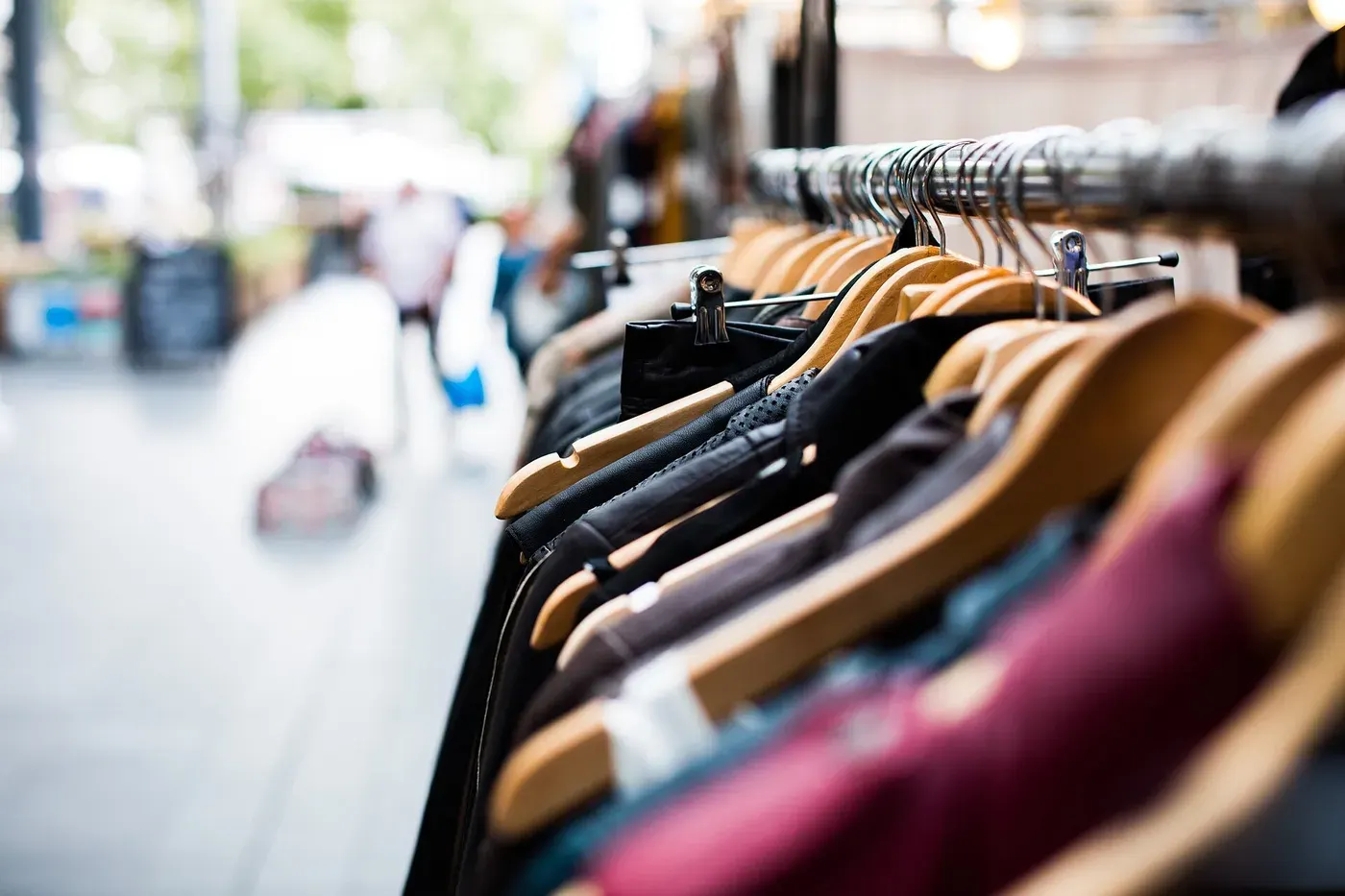
Branded second hand clothes wholesale means lots in which known labels can appear, not lots built around one named brand. In a mixed or door-to-door lot, brands are possible but never promised. If labels matter to your trade, the line to read first is STOCK, where brands and contents are confirmed in the offer.
What "branded" means in a mixed lot
A used-clothing lot is made of whatever households and collections produced. Some pieces carry labels a shopper recognises, many carry labels nobody asks about, and some carry none at all. The share changes from lot to lot, which is why a supplier who is straight with you describes the lot by line, product type and weight and leaves the brand question open.
That has a practical consequence. If your customers walk in asking for sportswear or denim by label, you cannot plan a rail around a mixed lot. If they buy on condition and style, a mixed lot with some known labels is a pleasant surplus and not the base of the plan.
Branded second hand clothes wholesale and the STOCK line
STOCK is the line for new items with tags, described on the site as new branded clothing. It is the nearest thing to a label-led purchase, but the details still live in the offer: which brands, which garments and how many are confirmed there, not read off the name of the line.
Think of STOCK as another kind of goods rather than a better grade of used clothing. The items are new, so questions about wear do not apply in the same way. Questions about the season, the sizes and the mix of styles apply even more. Ask for them in writing and compare the offer with your sales history.
There is a customs side to the difference as well. The UK Trade Tariff reserves heading 6309 for worn clothing and other worn articles, and note 3 to chapter 63 says such goods must show signs of appreciable wear and be presented in bulk or in bales, sacks or similar packings.
Chapters 61 and 62, which cover knitted and woven apparel, say in their notes that they do not cover worn articles of heading 6309. A parcel of new tagged garments therefore belongs to a different part of the tariff from a bale of worn ones, and your customs agent will want to know which you are buying.
How to ask for a brand-heavy lot
You get a more useful answer by describing your customer than by listing a dozen labels. Say what the customer wears and where you sell: sports and outdoor, workwear, denim, evening wear, children's clothing. Say which sizes move and which season you are stocking for.
Then add the question that sorts honest offers from vague ones: what can the offer confirm, and what is only possible? A reply that separates the two is a good sign. A reply that says "lots of brands" with no further detail tells you nothing you can resell.
If you buy through Original D2D, treat labels as upside. Door-to-door household collections arrive as people have worn and kept them, so labels are possible but not promised.
Where known labels add value
Wholesale used branded clothing helps a reseller in three places. Labels speed up listing online, because buyers search by name. They raise the odds of a quick sale on a rail where shoppers browse by label. And they give you a talking point when you sell onward to other traders.
They do not make a lot uniform. A pair of branded trousers with a broken zip is still a pair of trousers with a broken zip, and a plain garment in perfect condition may sell faster than a labelled one with pilling. Judge the lot on condition and fit first and on the label second.
Telling your own customers what the lot is
A rail sign that says "branded" invites every shopper to check every label, and each disappointment costs you a repeat visit. A sign that says "mixed used clothing, labels vary" sounds dull but holds up. Put a label name on a price tag or a listing only for pieces you have looked at yourself.
Online, the same logic applies to titles and photos. Show the label when it is legible, and describe flaws in the text. Returns on listings that promised more than the photos showed are a cost that never appears in the purchase price of the lot.
Designer pieces: keep expectations level
No supplier can say in advance whether a mixed lot will contain a designer piece. Anyone who offers designer second hand clothes bulk with a firm promise on the contents has either sorted the lot piece by piece or is overselling it. In the second case you find out at unloading.
If designer items would change your numbers, say so and ask what the supplier can offer in writing. If the answer is that it cannot be promised, plan your margin without those pieces and treat any that appear as a bonus.
Selling genuine goods on: the trade mark rule
Reselling a used branded garment is not an infringement in itself, and the law has a name for the reason: exhaustion of rights. Section 12(1) of the UK Trade Marks Act 1994 says a registered trade mark is not infringed by use of the mark on goods that have been put on the market in the United Kingdom or the European Economic Area under that mark by the proprietor or with the proprietor's consent.
The words "the United Kingdom or" were added with effect from 31 December 2020.
The same section has a limit. Subsection (2) says the rule does not apply where there are legitimate reasons for the proprietor to oppose further dealings in the goods, in particular where the condition of the goods has been changed or impaired after they were put on the market. In plain terms, a damaged or altered item is a weaker candidate for resale under a brand name than an intact one.
The EU side of the same question
Buyers in the EU work under a parallel rule. Article 15 of Directive (EU) 2015/2436 says a trade mark does not entitle the proprietor to prohibit its use on goods put on the market in the Union by the proprietor or with consent, with a similar exception for changed or impaired goods.
Note the words "in the Union". A first sale in the United Kingdom is not a first sale in the Union, and the UK government's guidance on exhaustion, updated on 15 May 2025, says that businesses exporting IP-protected goods from the UK to the European Economic Area might need the right holder's consent.
How that applies to a given shipment of used clothing is a question for an intellectual property adviser, not for a blog or a price list. What a buyer can do is raise it early and ask the supplier how they approach it.
What customs does about counterfeit goods
EU customs can act when goods suspected of infringing an intellectual property right are, or should have been, under customs supervision or control. Regulation (EU) No 608/2013 sets out the procedure. It defines counterfeit goods, among other things, as goods that infringe a trade mark in the Member State where they are found and bear without authorisation a sign identical to the validly registered trade mark for the same type of goods.
Under Article 18 the authorities notify the declarant or holder of the goods within one working day of suspending release or detaining them. The practical point for a reseller is simple: a lot that is detained stops moving, and the time it spends in a customs shed is your time. A supplier that describes goods plainly and does not promise labels it has not checked is easier to deal with in that situation.
The scale of the problem is documented. A study published by the European Union Intellectual Property Office on 16 January 2024, using 2018-2021 data, found that the clothing industry loses 5.2% of its sales to counterfeit goods, the largest loss in absolute terms of the three sectors it examined.
It also named Germany as the EU country most affected in clothing and toys. The figure is a reason to be careful with labels, not a statement about any particular lot.
What the rules mean for a reseller
| Text | What it says | What to do with it |
|---|---|---|
| UK Trade Marks Act 1994, s.12 | Genuine goods put on the market in the UK or EEA with the proprietor's consent may be resold; not if condition is changed or impaired | Sell items as they are, and set aside altered or damaged branded pieces |
| Directive (EU) 2015/2436, Art. 15 | The same idea for goods put on the market in the Union | Ask how the supplier treats goods first sold in the UK; take advice |
| Regulation (EU) No 608/2013 | Customs can act on goods suspected of infringing a trade mark | Keep the offer, photos and papers together in case of a query |
| UK Trade Tariff, chapter 63 note 3 | Heading 6309 is for worn goods in bulk or in bales, sacks or similar packings | Tell your customs agent whether the lot is worn or new |
Checking labels when the lot arrives
Open the lot and go through it as you would for sorting: label, care label, wear at collars and cuffs, zips, hems, smell. Record how many pieces carry a label you can sell by name and how many are plain. Do this for the first lot even if it feels slow; the figures become your own benchmark for the next order.
If a piece looks wrong to you, with a label that does not match the style, a care label that does not agree with the garment or finishing that is out of line with the rest of the lot, put it in a separate crate.
Photograph it with the label visible and do not list it under the brand name until you are satisfied. If you want the supplier to look at it, raise it in writing and within the period the offer sets for complaints.
Describe items to your customers only as far as you can see for yourself. If a label is missing, worn off or unclear, sell the piece on its look and condition. Our article on sorting techniques shows how traders split a lot into sales groups.
Condition comes before the name
A label tells a customer what to expect, and condition tells you whether the expectation will be met. Check seams, linings, zips, buttons, pilling and stains in good light. Branded pieces that fail those checks go to the discount rail or to a different channel, where the name matters less.
Our guide to quality control on delivery goes through the same checks step by step, including how to record what you find.
Words to watch in an offer
Read the description of a lot as a list of promises and a list of hopes. "Contains known labels" is a hope, "may include sportswear" is a hope, and "new items with tags, brands listed" is a promise only if the list is in the written offer. Vague adjectives such as "popular" or "famous" cost the supplier nothing and tell you nothing.
Ask for the weight and the number of units where the line allows it, because the label count means little without them. A lot of a given weight holds more or fewer pieces depending on whether it is mostly T-shirts or mostly jackets, and a brand share quoted per piece does not carry over between the two.
What to put in an enquiry about labels
- the line you are considering and the product type, for example sweatshirts, jackets or shoes;
- your customer and your sales channel, shop rail or online;
- the sizes and the season you are stocking for;
- whether you accept a mixed lot with possible labels, or need new items, which is a STOCK question;
- a request for photos or a short video of your own lot before you confirm.
Keep the message short and put the question about what is confirmed and what is possible in the last line, where it is hard to miss.
Planning margin without promised brands
Work out what you would earn if the lot had no recognisable labels at all, and see whether the purchase still makes sense. If it does, any branded pieces improve the result. If it does not, the plan depends on something the supplier has not promised, and you should either change the line or ask for more detail in writing.
For a view of the higher end of used clothing, read the piece on cream-grade clothing. When you are ready to describe your own customer, send us a short enquiry with the line, the product type and your sales channel.
Frequently asked questions
Can I order a lot that contains only one brand?
Lots are described by product line, type and weight, not around a named brand. In a mixed or collected lot known labels can appear but are not promised. For anything brand-specific, ask what the written offer can confirm before you decide.
Is STOCK the same as branded used clothing?
No. STOCK is new items with tags, described on the site as new branded clothing, while used lines contain worn pieces. In STOCK the brands and contents are confirmed in the offer, so read that document before you decide.
Will photos show which labels are in my lot?
Photos and descriptions are indicative, and each lot differs in weight, condition and style. Ask for photos or a short video of your own lot before you confirm, then check the labels yourself when it arrives and count what you can sell by name.
May I resell branded used clothes in the EU if they were first sold in the UK?
The EU exhaustion rule in Article 15 of Directive (EU) 2015/2436 speaks of goods put on the market in the Union, and UK guidance says exporters to the EEA might need the right holder's consent. Ask an intellectual property adviser how this applies to your goods.
What should I do if I think a piece is not genuine?
Set it aside in a separate crate, photograph the label and the garment, and do not list it under the brand name. If you want the supplier to look at it, report it in writing within the complaint period stated in the offer.
Which tariff heading covers worn clothing and which covers new?
The UK Trade Tariff puts worn clothing and other worn articles in heading 6309, if they show appreciable wear and come in bulk or in bales, sacks or similar packings. New garments sit in chapters 61 and 62. Confirm the code for your shipment with your customs agent.