Wholesale second hand clothes for Germany from a UK supplier
From enquiry to unloading: the order stages for a German buyer, what is agreed in writing, and what to name in the first message.
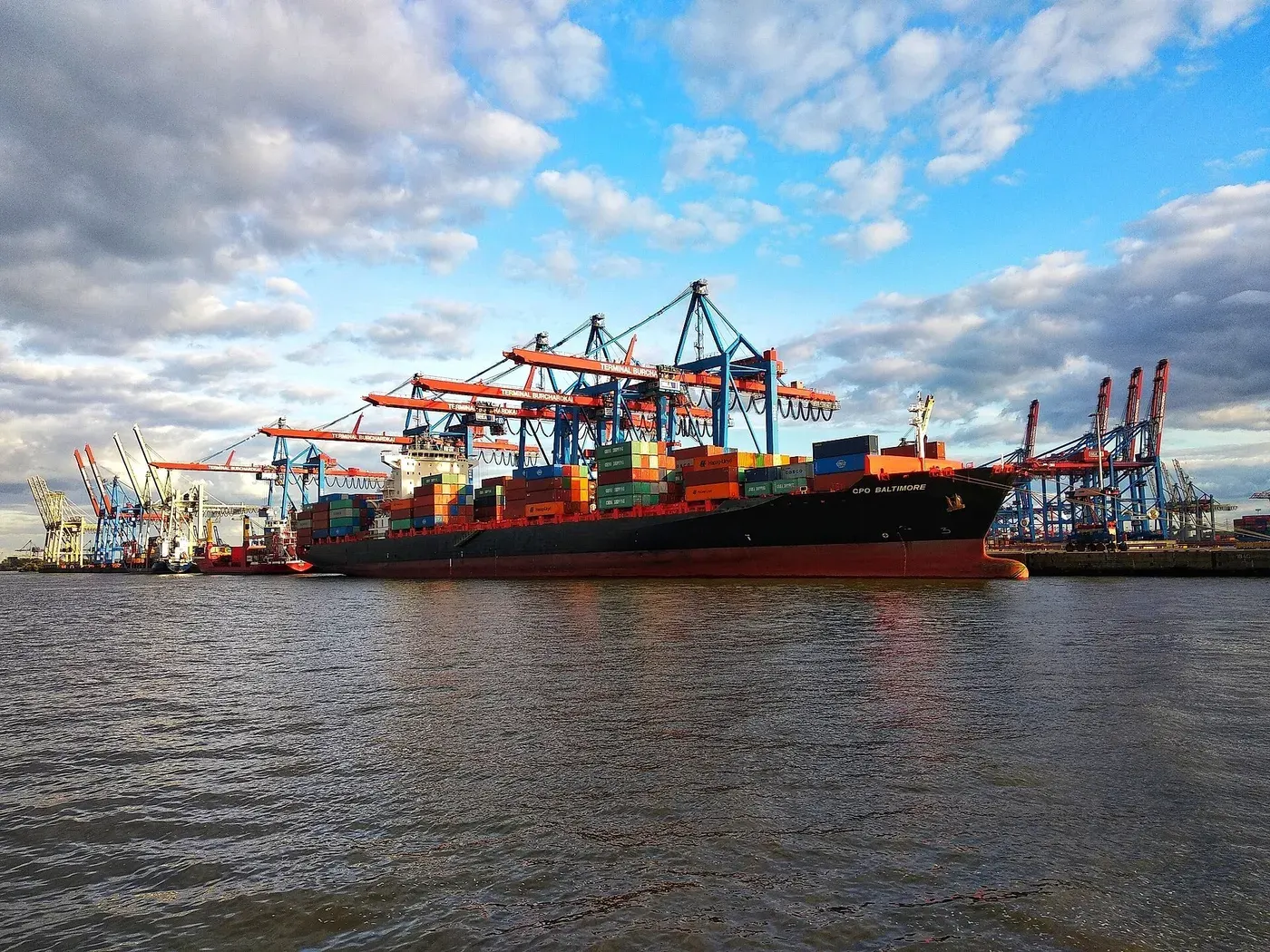
Wholesale second hand clothes Germany orders from the UK follow a fixed sequence: enquiry, written offer, loading, road transport with a sea or tunnel crossing, customs clearance in Germany and unloading. Since Brexit the UK is a third country for German customs, so paperwork on both sides belongs to the order and is agreed in writing each time.
How an order runs from enquiry to unloading
An order for a German buyer passes through seven stages. The stages are the same for every destination, but the customs step looks different for Germany than for a country outside the EU, and the offer is where the details are fixed.
- Enquiry: you name the product line, product types and the way you resell.
- Written offer: the line, weight, packing, payment terms, delivery terms and who handles customs are confirmed in the email offer.
- Confirmation: both sides accept the offer in writing, and payment follows the agreed terms.
- Loading and UK export: the goods are loaded and an export declaration is made in the UK.
- Road transport: the vehicle goes by road and crosses the sea or the tunnel; no travel time is promised.
- German import clearance: a customs declaration is lodged in Germany and import VAT is dealt with.
- Delivery and check: you unload, check against the offer and report any difference in writing.
Delivery terms are agreed per order, and the offer should say which party arranges and pays for each stage. If you take a stage on yourself, for example by naming the haulier or filing the declaration, that goes into the offer too. It shows where the supplier's part ends and yours begins, and it settles who answers a question when something is missing. The delivery countries page lists where goods are sent.
What your first message should contain
A German buyer gets a more precise offer by describing the operation than by asking for a general price list. Name the product line you are interested in, such as Original Container for unsorted goods or Original D2D for household collections, and say which product types you resell.
Add the practical facts that shape the shipment: your delivery address and unloading arrangements, whether you will clear customs yourself or use an agent, and your company's EORI number and VAT number. The minimum order for a line is stated in the offer, so ask for it there. Ask for photos or a short video of your lot before you confirm; catalog pictures are indicative only.
Wholesale second hand clothes for Germany: what changed after Brexit
German customs describes the United Kingdom as having third-country status since the exit. Its Brexit page adds that the trade and cooperation agreement between the EU and the UK applies only to preferential trade between the two. Goods are therefore handled as goods from a third country, and the questions of origin, duty and VAT are settled at the German border.
On the UK side, the government's guidance on exporting goods says an exporter can hire someone to deal with customs and transport or do it themselves, that the recipient has to make an import declaration in their country, and that the exporter must keep commercial invoices and any customs paperwork. A written offer should say who does what at each end.
Customs clearance in Germany: who lodges the declaration
The European Commission's Access2Markets guide says importers must apply for an EORI number, valid across the EU, and that customs clearance can be lodged by the importer or by a customs representative appointed to complete all the formalities. It adds that import duties are often paid by the importer, and that the payer depends on the agreement with the seller.
German customs gives more detail. It states that the EORI number must be entered in customs declarations for the declarant, the representative and the importer. A business from a third country acting as importer does not need an EORI number, but it does need one if it appears as declarant or carrier before German customs. German customs also says that a declarant must as a rule be established in the EU.
This usually means a UK supplier would not be the one to lodge your German declaration. Either your company files it, or you appoint a customs agent; confirm the route with your agent. German customs describes ATLAS as its IT procedure for clearing goods, and it also allows declarations for release for free circulation to be prepared online. Your agent knows which route fits your volume.
Where the goods are cleared
Clearance does not have to happen at the first EU port or tunnel exit. The government's step-by-step guidance on moving goods out of Great Britain using transit (updated 1 August 2023) describes a route in which the exporter first makes an export declaration and then a transit declaration that quotes the export declaration reference. The haulier presents the goods at an office of transit on entering the EU.
The haulier then goes to the office of destination or an authorised consignee's premises to end the movement.
The same page says the security lodged for the movement is released when the transit movement is discharged. Whether a given order travels under transit, or is cleared where it enters the EU, is a decision for the order: it changes who holds the security and where your agent meets the vehicle, so put the chosen route in the offer.
Commodity code 6309 and what the declaration describes
The UK Trade Tariff lists heading 6309 as "Worn clothing and other worn articles", and Eurostat reports German trade in this group under the eight-digit code 63090000. The code must match the goods that are really in the load.
The tariff has a separate heading, 6310, for used or new rags and scrap, and the notes to the apparel chapters 61 and 62 exclude worn clothing of heading 6309. A load of rags or of new tagged garments is therefore described differently from a load of worn clothing.
Ask the supplier which code the export declaration will use, and give your agent the offer and the packing list in good time. The declared description, weight and value should match the invoice, since the declaration and the invoice are read together.
Import VAT in Germany
German customs explains that import VAT arises when goods are imported from a third country, and that the customs value is in principle the tax base. Section 12(1) of the German VAT Act sets the standard rate at 19 percent of the tax base.
Section 12(2) lowers the rate to 7 percent for goods listed in an annex. Which rate applies to your goods is a question for your customs agent or tax adviser, not for this page.
Import VAT is not necessarily a final cost to a registered business. Section 15(1) of the same Act lists the import VAT incurred on goods imported for a business among the amounts that can be deducted as input tax, and the Access2Markets guide says VAT-registered firms can reclaim it.
German customs also notes that the EORI number is needed to prove, to the tax office, the import VAT assessed through ATLAS. Keep the customs documents with your accounts.
The paperwork the UK seller needs back
The supplier has its own duty to prove the goods left the country. HMRC's VAT Notice 703, last updated on 4 March 2026, says that zero-rating an export requires official or commercial evidence of export and that the evidence must be obtained within the time limits in the notice, which is three months for direct and ex-works exports.
The notice adds that where the buyer arranges collection the standard of evidence required is high, and that copies of transport documents alone are not enough. A German buyer who organises its own transport may therefore be asked to return copies of its customs documents. Agree in the offer who sends which paper and by when, so the request does not arrive as a surprise.
The CMR note and the road leg
For road transport between two countries the CMR Convention applies. Article 13(1) gives the consignee, after the goods arrive at the delivery place, the right to require the carrier to hand over the second copy of the consignment note and the goods against a receipt. What you sign at the door is therefore a document, and you should read it before you sign.
Article 11 deals with customs papers. The sender attaches the necessary documents to the consignment note or puts them at the carrier's disposal. The carrier has no duty to check whether they are accurate or adequate, and the sender is liable to the carrier for damage caused by their absence or irregularity. Agree early with the supplier who provides which document, because a missing paper is a problem for the vehicle and for your delivery date.
Note any visible damage or shortage on the receipt before the vehicle leaves, and follow the written steps in the buyer's quality checks.
The German market in public data
Eurostat's Comext database records German imports under CN 63090000, worn clothing and other worn articles. The weight arriving from the UK has moved a lot from year to year, as the figures below show. They are quantities, not prices, and they cover everything declared under that code.
| Year | From the UK (thousand tonnes) | From all origins (thousand tonnes) | UK share (percent) |
|---|---|---|---|
| 2021 | 20.2 | 53.4 | 37.8 |
| 2022 | 25.9 | 64.6 | 40.2 |
| 2023 | 12.2 | 49.8 | 24.5 |
| 2024 | 8.3 | 40.1 | 20.7 |
The share column is a calculation from the two Eurostat series. Read the table with care: it counts everything declared under one code, from every kind of supplier, and says nothing about quality, season or whether the goods were later sorted and sent on. It does show that volumes from the UK change sharply from one year to the next, which is a reason to fix specifications in writing instead of relying on what a previous lot looked like.
The Federal Statistical Office (Destatis) reported in January 2025 that Germany exported about 452 thousand tonnes of used textiles in 2023, with the Netherlands (16 percent) and Poland (15 percent) the largest buyers, and that the export figure includes trade goods and intermediary trade through Germany. So Germany is a trading point for used textiles, not only a place that collects them.
Destatis also reported in January 2025 that about 175 thousand tonnes of textile and clothing waste were collected from private households in 2023, roughly 2 kilograms per head, 55 percent more than ten years earlier, and that separate collection of textiles became mandatory in Germany on 1 January 2025. Its waste statistics cover only separately collected textiles passing through waste management, and do not include textiles in residual waste or most of the second-hand market.
For 2022 Destatis cited EU-wide figures: 910 thousand tonnes of textile waste collected, of which Germany accounted for 148.9 thousand tonnes, or 16 percent. Per head, Germany sat at the EU average of about 2 kilograms, below Belgium (6 kilograms), the Netherlands (5 kilograms), France and Austria (4 kilograms each).
The recycling association bvse reported in August 2026 that Germany collected 1.3 million tonnes of used textiles in 2023, that the share of foreign and disruptive matter had risen to 15 to 20 percent, and that the reuse share had fallen from 62 percent in 2018 to 44 percent. A German reseller therefore has reasons to ask where lots come from, how much of a lot is sellable and who handles the rest.
Gaps that slow an order down
Most delays in cross-border orders come from a short list of gaps, and each follows from a rule above. The importer's EORI number is missing from the documents. Nobody has named the declarant. The description on the invoice does not match the packing list. The transport route, and so the clearance point, was never written down. Or the buyer collects the goods and nobody remembers that the supplier needs proof of export.
Fix them in the enquiry, not at the border. A short checklist agreed in writing before loading is cheaper than a vehicle waiting for a document.
What to specify so the offer fits your operation
Most misunderstandings in cross-border orders come from details nobody wrote down. Put these in the enquiry and then check them in the offer:
- the product line, product types and the season you are buying for;
- the delivery address, unloading hours and equipment on site;
- who lodges the German customs declaration and who pays duties and import VAT;
- which documents travel with the goods: invoice, packing list and the consignment note;
- your EORI number and VAT number, so the documents carry them;
- how you will report a difference after delivery, which is in writing.
For shoes, the lot formats and matching rules are in the guide to second hand shoes from the UK, and for sorted goods see how used clothes are sorted. Each lot is sold by weight, and photos and descriptions are indicative only.
Next step
Send your product line, the outlets you supply, your delivery address and the name of your customs agent through the contact page. A concrete first message lets the written offer cover the German stages one by one, and you can compare it with your own checklist.
Frequently asked questions
Who lodges the customs declaration for a UK to Germany shipment?
German customs says a declarant must as a rule be established in the EU, so the declaration is normally lodged by your company or by a customs agent you appoint. Who does what is agreed in the written offer, and your agent confirms the practical route.
Do I need an EORI number to buy from the UK?
German customs requires the EORI number in customs declarations for the declarant, the representative and the importer. If your company is established in Germany and acts as importer, plan to hold one. Apply through German customs and give the number in your first message.
Can I deduct import VAT in Germany?
Section 15(1) of the German VAT Act lists import VAT on goods imported for a business among deductible input tax, and the Commission says VAT-registered firms can reclaim it. Check your own position and the rate with a tax adviser or customs agent.
Which commodity code applies to used clothing?
The UK Trade Tariff lists heading 6309 as worn clothing and other worn articles, and the EU statistics use the eight-digit code 63090000. Your customs agent confirms the code for your load and checks that the description on the invoice matches the goods.
What does the CMR consignment note do for me as the receiver?
Under Article 13(1) of the CMR Convention you may require the carrier to deliver the second copy of the note and the goods against a receipt. Write any visible damage or shortage on that receipt before the vehicle leaves.