Used baby clothes wholesale: size, season, condition and safety checks
Children's lots mix sizes fast and change season by season. Here is how to read a lot, which safety points to check and what to specify before you order.
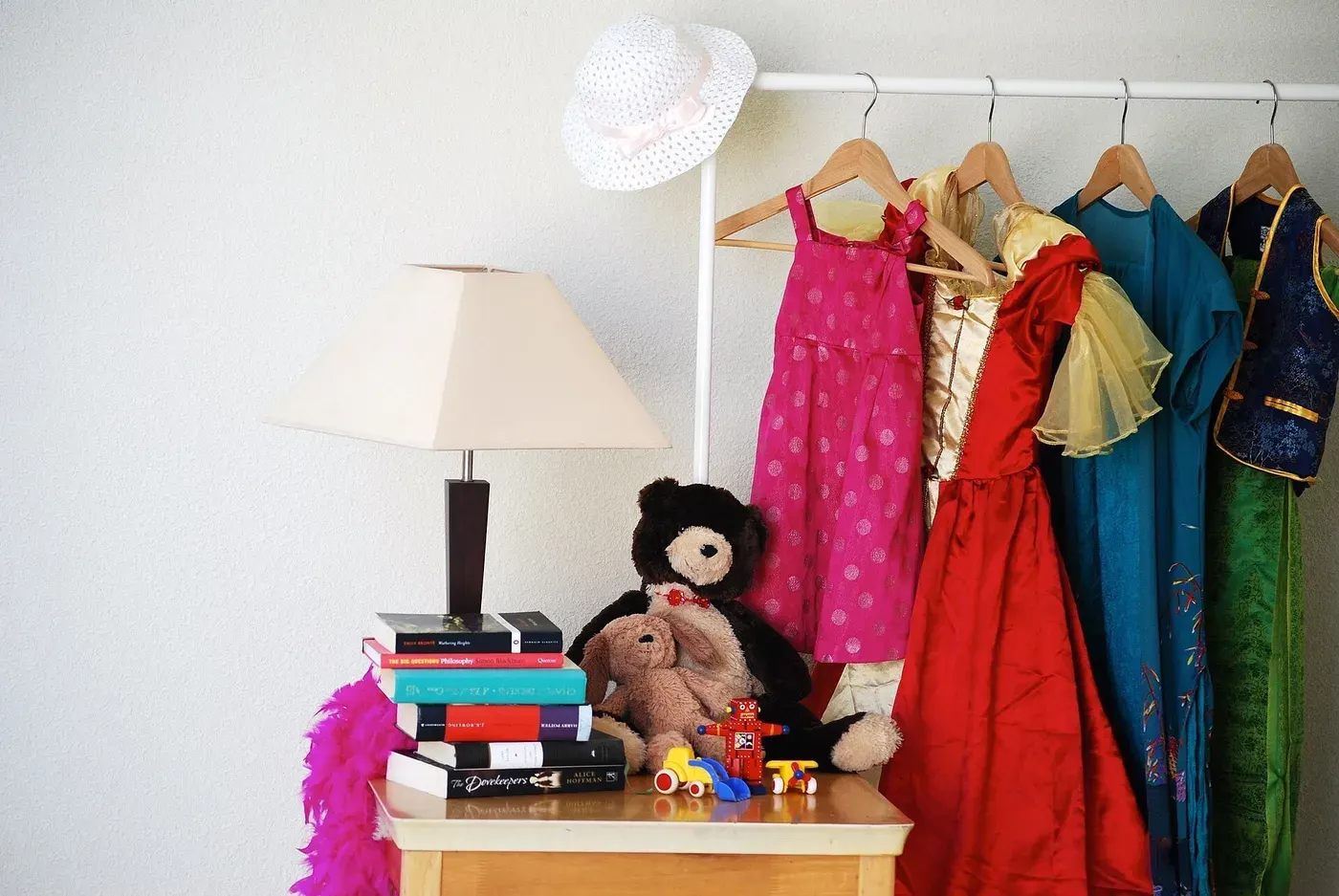
Used baby clothes wholesale lots are sold by weight and arrive as a mix of sizes, seasons and garment types. A buyer's job is to say which age range and which season the shop needs, and to ask how the lot is composed, since children outgrow clothes quickly and the pieces often show light wear.
Why children's lots behave differently
Children wear a garment for a short stretch, then move up a size. That is why many pieces in second-hand baby and kids lots can be in good shape, and it also explains why the size spread is wide. A lot may hold newborn bodysuits next to school trousers, and a single bale can span several age bands.
Compare that with adult clothing, where a lot is spread across a handful of sizes. In children's goods each size has a short selling window for your customers. A parent buys the next size up and then does not return for that size, so your stock needs to match the families that actually shop with you.
Sizes: what to specify
Describe your customer by the age range, not by the label on the garment. Labels from different brands and countries are not identical, and one maker's age marking can fit like another maker's next size. Ask which size bands the lot covers and whether goods are sorted by band or mixed.
Some retailers want baby sizes only, and others want older children or a blend. Say which. If you resell through a second-hand children's shop, a lot split into narrow bands will save you the sorting. If you sell through a market stall, a wider mix may be fine as it gives passers-by more choice.
Age, height or both on the label
A size label can state an age band, a body height or both, and the three do not always agree. The European size-designation standard EN 13402 is built on the other idea: BSI describes part 2 of it as a flexible sizing system based on body dimensions, with size labelling information for consumers, and it specifies primary and secondary dimensions for types of garment.
In practice a lot from the UK may carry labels in months and years while customers in your country shop by height or by a number. Decide which system your shop uses, say so in the enquiry, and plan on converting by eye from a few garments in the first lot rather than from a chart. Sizing differs by maker, and a chart is only a starting point.
Seasons and timing
Children's wardrobes shift twice a year, and each shift means a stock rotation. Winter lots carry coats, snowsuits, hats and knitwear, while summer lots carry shorts, dresses, light jackets and swimwear. Mixed bales hold both and leave part of the stock waiting for the next season.
Tell the supplier when the goods will go on sale. A lot ordered in autumn for a winter rack should not be mostly sandals, and giving the sale date lets you ask whether the lot suits it. Goods go from the UK by road and a sea or tunnel crossing, so allow time for the trip and for any customs paperwork your country needs.
Condition questions for second hand children clothing bulk
For second hand children clothing bulk orders, condition is the question that settles the margin. Children's clothes show wear in particular places: knees, elbows, cuffs and prints. Ask what level of wear the lot allows and whether stained or faded items are removed or left in.
These points are worth putting to the supplier in writing:
- whether fastenings such as zips, poppers and buttons are expected to work;
- how stains, bobbling and fading are treated in the lot;
- whether the goods are cleaned or only sorted before packing;
- whether the lot holds shoes or accessories alongside clothes.
Also treat yourself as the final seller: wash and check before putting anything on the rail. This is routine in used children's goods.
Used baby clothes wholesale: how lots are mixed and sold
What kids clothes wholesale UK suppliers offer is sold by weight and by product line, so the bale you receive is described by what it is, not by item count. A lot may be a broad collection of clothing, or sorted into a narrower group. The offer states the product line, and the weight, condition and style vary by lot.
Photos in the catalog are indicative only. Before you confirm, ask for photos or a short video of the lot, and look at the size spread in them. For the sorting names that suppliers use, see the guide to what cream means, and ask for the meaning in plain words.
Cords and drawstrings: the detail that matters most
If one safety point deserves a check on every children's lot, it is cords. The European standard EN 14682, "Safety of children's clothing - Cords and drawstrings on children's clothing - Specifications", is the reference used for this hazard. Commission Implementing Decision (EU) 2015/1345 of 31 July 2015 listed the 2014 edition for publication in the Official Journal, in place of the 2007 edition.
The British Office for Product Safety and Standards gives a worked example for a garment intended for children under three. It says EN 14682:2014 does not allow drawstrings or functional cords in the head, neck or upper chest area, and that decorative cords are not permitted anywhere on the hood or at the back of the neck.
The hazard it describes is a cord becoming entangled around the child's neck during normal activity, and the example is assessed under the General Product Safety Regulations 2005.
The scale of non-compliance is documented. In a report on children's costumes published on 22 October 2024 and updated on 7 November 2024, the same office said that of 74 items tested against BS EN 14682, 61 failed. Costumes are not everyday baby clothes, but the figure shows why a reseller should look at cords with the garment in hand.
For babies a simple rule works: the closer an item sits to the neck and face, the stricter the check should be. Besides cords, look at hoods, collars, buttons on the chest and any small decorative parts that could come off.
What to do with a doubtful garment
Check hoods, necklines and chest areas on jackets, hoodies and sleepwear for cords, toggles and long ties. A garment that has them should be assessed against the standard by someone competent before it goes to a customer, and the safe choice for a baby or toddler piece is to remove the garment from stock.
Do not cut cords off and sell the item on as though nothing had happened without taking advice, since the way a garment is altered matters.
Chemicals in clothing and the second-hand clause
EU chemical law restricts substances in clothing. Entry 72 of Annex XVII to the REACH Regulation, added by Regulation (EU) 2018/1513, says clothing and related accessories, textiles that touch the skin like clothing, and footwear, for use by consumers, may not be placed on the market after 1 November 2020 if a listed substance is present at or above the concentration given in Appendix 12.
The list includes cadmium, chromium VI, arsenic, lead, benzene, formaldehyde and certain phthalates.
The same entry, in paragraph 3(c), says paragraph 1 does not apply to second-hand clothing, related accessories, textiles other than clothing or footwear. That is the exact wording, and it should be read together with the rest of the entry and with the rules of your own country.
The practical point is simple: the exemption does not give a used garment a clean bill of health, so check odour, residues and condition on used pieces yourself.
Nightwear and babies' garments
Great Britain has a specific rule for sleepwear. The Nightwear (Safety) Regulations 1985, in the original text, define children's nightwear as nightwear designed for and normally worn by a person under the age of 13, and a baby's garment as one with a chest measurement not exceeding 53 centimetres that would normally be worn only by a child under three months.
Regulation 4 says children's nightwear, other than pyjamas, babies' garments and cotton terry towelling bath robes, must not be made of fabric that cannot meet the flammability performance requirements after washing, and that pyjamas, babies' garments and such bath robes must be labelled under Schedule 2.
The page that carries this text does not discuss second-hand supply, so ask an adviser whether and how it applies to goods you resell. For your own handling, the useful step is to sort sleepwear into its own crate and to look for labels that state the flammability information.
Sorting a children's lot on arrival
Split the lot first by size band and then by season, because a rack of newborn pieces and a rack of school clothes attract different customers. Sleepwear, outerwear and anything with cords or hoods each get a crate of their own, so that the pieces needing a closer look are already together when you start checking.
Make one pile for items that are fit to sell as they are, one for items that need washing or small repairs, and one for items that should leave the stock. Count each pile and write the figures next to the lot reference. After two or three lots you will see how much of a typical children's lot lands in each, and you can order with that in mind.
A checklist for every children's lot
- size bands and seasons present, compared with what you asked for;
- cords, ties and toggles at hoods, necks and chest areas;
- zips, poppers and buttons: do they work, are any missing;
- stains, bobbling, fading and worn prints;
- odour, damp or mould in the bag or bale;
- sleepwear, set apart and checked for labels;
- photographs of any problem, taken with the packaging and the label in view.
Our guide to quality control on delivery explains how to turn these notes into a written report that a supplier can act on.
Rules at a glance
| Text | What it covers | Point for a reseller |
|---|---|---|
| EN 14682, Decision (EU) 2015/1345 | Cords and drawstrings on children's clothing | Inspect hoods, necklines and chest areas; set aside doubtful garments |
| General Product Safety Regulations 2005 | Consumer products supplied in the UK, including used goods | Used does not mean outside product safety law |
| REACH Annex XVII, entry 72 | Listed substances in clothing and footwear | Paragraph 3(c) exempts second-hand clothing; still check condition and odour |
| Nightwear (Safety) Regulations 1985 | Flammability and labelling of children's nightwear | Keep sleepwear separate and look for labels |
| EN 13402 | Size designation by body dimensions | Say whether you sell by age or by height |
Safety and the rules of your country
No safety testing or compliance marks are claimed for used children's goods, and nothing in an offer should be read that way. Rules for the sale of children's products differ between countries, and the reseller is responsible for knowing the rules where the goods are sold.
Put simply, that means checking small parts, cords and fastenings yourself, and leaving out what you would not sell. Ask the supplier any condition question before you order, and keep the written answer with your copy of the offer.
Who buys baby and children's lots
Typical buyers include second-hand children's shops, market sellers, online resellers who list by size and organisers of community sales. Each of them wants a different cut of the lot: shops want clean, sorted pieces, stalls want volume, and online sellers want the good ones.
If your plan includes toys as well, the toys catalog and the note on used toys cover that product type separately. Shoes for children are covered in the guide to second hand shoes.
Next step
List the age bands you sell, the season you are stocking for and the level of wear you accept, then send it with a request for photos of a current lot through the contact page. The minimum for a children's lot is set per product line and written into the offer.
Frequently asked questions
Can I order only baby sizes?
Ask for it in the enquiry. What is possible depends on the product line and the lot at hand, and the offer will state the content. Name the age range and season you need so that the answer is specific.
Are children's clothes cleaned before sale?
Do not assume it. Ask the supplier whether goods are cleaned or only sorted, and plan to wash and check items yourself before you put them on sale. This is normal practice for used children's clothing.
Do the lots come with safety documents?
No safety testing or compliance marks are claimed for used children's goods. Rules differ by country, so check what applies where you sell, inspect small parts and fastenings, and leave out anything you would not hand to a customer.
Will the lot include only my season?
Not necessarily. Mixed bales hold several seasons unless the offer says otherwise. Give the sale date and the season you stock, then check the written offer for how the lot is described before you confirm.
How do I judge the size spread of a lot?
Ask for photos or a short video taken from your own lot and look at the labels and cuts of a handful of garments. Catalog photos are indicative only, and the offer states the product line and weight, not a count by size.
Which standard covers cords and drawstrings on children's clothing?
EN 14682, Safety of children's clothing - Cords and drawstrings. Commission Implementing Decision (EU) 2015/1345 listed the 2014 edition, and UK guidance refers to the same text. Check hoods, necklines and chest areas by hand and ask an adviser how it applies to goods you resell.
Do EU chemical limits for clothing apply to second-hand garments?
REACH Annex XVII entry 72 restricts listed substances in clothing and footwear for consumers, but paragraph 3(c) says paragraph 1 does not apply to second-hand clothing. That is not a clean bill of health, so check odour and condition and confirm your case with an adviser.